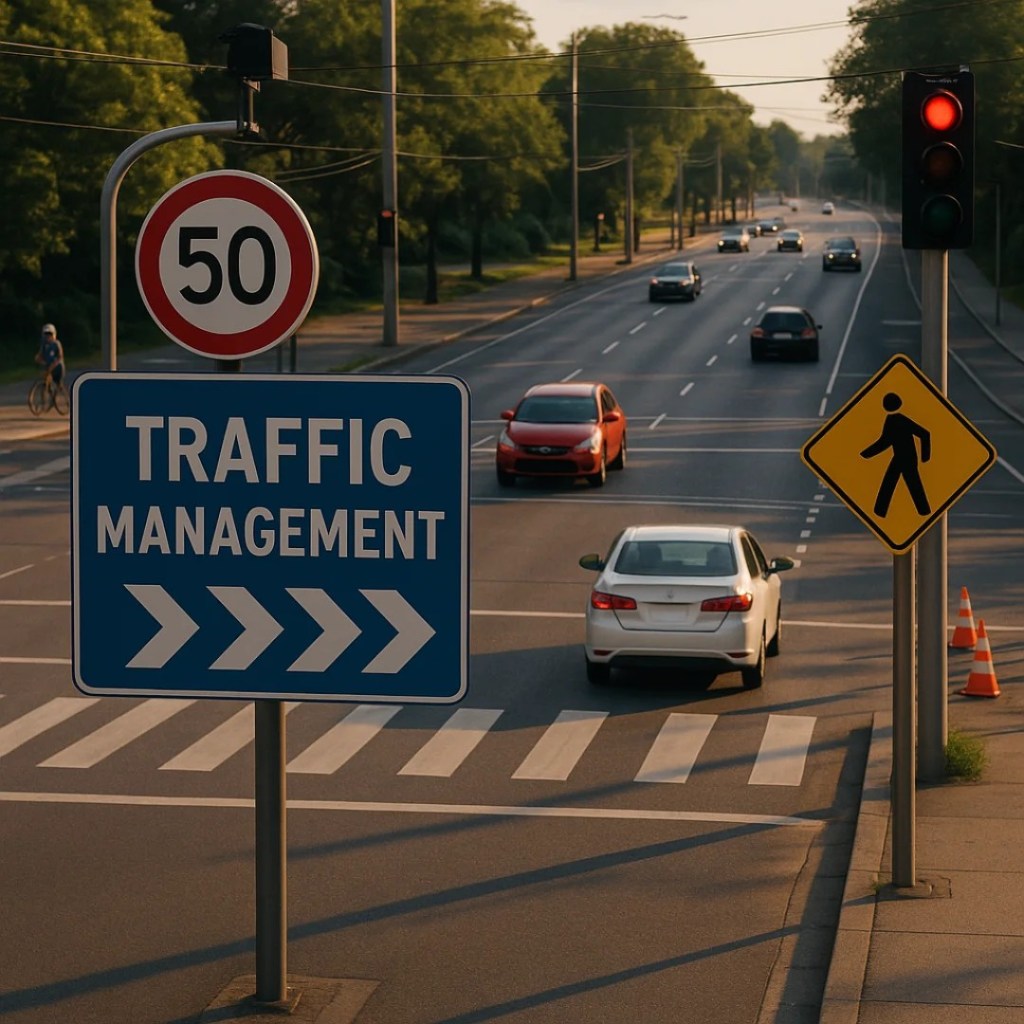
Smart Traffic Management for Future Cities: How AI and IoT Are Transforming Urban Mobility
As urban populations continue to grow, traffic congestion has become one of the most pressing challenges facing cities around the globe. Traditional traffic systems, reliant on fixed timers and limited data input, are no longer sufficient to handle the increasing demands of modern transportation. Enter smart traffic management — a transformative solution powered by Artificial Intelligence (AI), the Internet of Things (IoT), and real-time data analytics that promises to revolutionize urban mobility.
The Need for Intelligent Transportation Systems (ITS)
In many cities, daily commutes are hampered by unpredictable delays, roadblocks, accidents, and inefficient signal timings. These issues don’t just frustrate drivers; they have a significant economic and environmental impact. Traffic congestion leads to wasted fuel, increased air pollution, and productivity losses. According to the World Bank, traffic congestion costs cities billions of dollars annually in lost economic output.
Smart traffic management systems aim to mitigate these challenges by replacing outdated traffic control infrastructure with interconnected, adaptive systems that can respond to live conditions. These are often referred to as Intelligent Transportation Systems (ITS), and they represent the future of urban planning and infrastructure development.
How AI and IoT Work Together
AI and IoT are the backbone of modern smart traffic systems. Here’s how they work together:
- Sensors & IoT Devices: Cameras, GPS trackers, motion detectors, and environmental sensors are installed at key intersections and along major routes. These devices collect massive volumes of real-time data, such as vehicle counts, speeds, weather conditions, and more.
- Data Processing & AI Algorithms: AI processes this data to detect patterns, predict traffic trends, and make intelligent decisions. For example, if an accident is detected on a main road, AI can automatically adjust signal timings in surrounding areas to reroute traffic and prevent congestion.
- Communication Networks: Through vehicle-to-infrastructure (V2I) and vehicle-to-vehicle (V2V) communications, systems can send alerts to drivers via navigation apps or in-car systems, improving safety and travel time.
Benefits of Smart Traffic Systems
Implementing smart traffic management has a wide array of benefits:
- Reduced Congestion: Adaptive signal control reduces unnecessary waiting at traffic lights, improving traffic flow.
- Improved Road Safety: Real-time alerts and automated responses can minimize the chances of accidents.
- Environmental Impact: Efficient traffic flow means reduced emissions and better air quality.
- Cost Efficiency: Automated monitoring and control systems reduce the need for manual traffic supervision and enforcement.
- Data-Driven Decisions: Urban planners can use collected data to design better infrastructure and make informed investment decisions.
Real-World Applications
Cities like Singapore, Amsterdam, and Los Angeles have already integrated smart traffic systems with impressive results. Singapore’s intelligent traffic control system can adjust traffic signals every few minutes based on current traffic loads. In Los Angeles, over 4,500 traffic signals are synchronized using real-time data to reduce congestion during peak hours.
The Road Ahead
As 5G connectivity becomes more widespread, the potential of smart traffic management systems will increase significantly. With faster data transmission and low latency, future systems could include autonomous vehicles seamlessly communicating with traffic infrastructure in real time.
However, challenges remain. Data privacy, high implementation costs, and system integration are critical hurdles that cities must overcome. Strong policy frameworks, public-private partnerships, and long-term planning will be essential to fully realize the benefits of smart traffic systems.
Conclusion
Smart traffic management is not just a futuristic concept — it’s a practical, data-driven solution that can reshape how cities function. With the integration of AI, IoT, and real-time data, we are moving toward more sustainable, efficient, and livable urban environments.
🌐 For more information and detailed insights, visit https://humanityuapd.com


You must be logged in to post a comment.