Category Archives: DELICATE BALANCE – THE BRAIN’S EQUILIBRIUM [ HEMOSTASIS ]

SEIZURES [ DELICATE BALANCE – THE BRAIN’S EQUILIBRIUM ]

SEIZURES [ DELICATE BALANCE – THE BRAIN’S EQUILIBRIUM ( THE NERVOUS SYSTEM ) ]

Abnormal electrical activity in the brain produces seizures, which have a broad range of manifestations. Some are so minor that they may occur unnoticed, while others can cause violent spasms and convulsions. Victims may even lose consciousness. They can be a one time event or occur frequently.

A number of things can cause seizures: Serious conditions like strokes, brain tumors, and severe head injuries can generate them, as well as other seemingly harmless things like bright, rapidly flashing lights and low blood sugar.
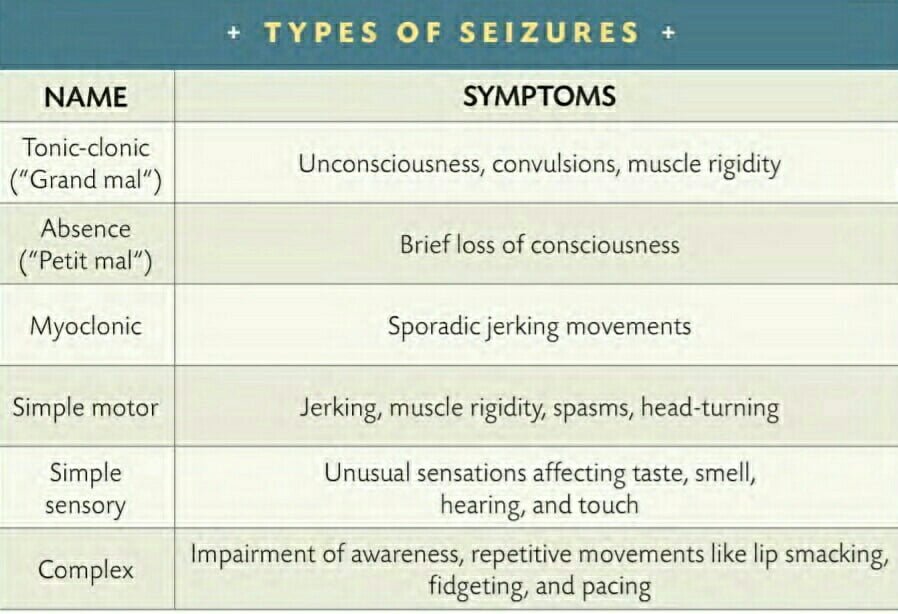
TYPES OF SEIZURES

There are two general types of seizures: generalized and partial. Generalized seIZures involve both sides of the brain from the beginning of an episode while partial seizures begin in specific regions of the brain and may spread to the entire brain. Generalized seizures have several subtypes, from tonicclonic seizures (formerly known as grand mal) to absence seizures (also known as petit mal).
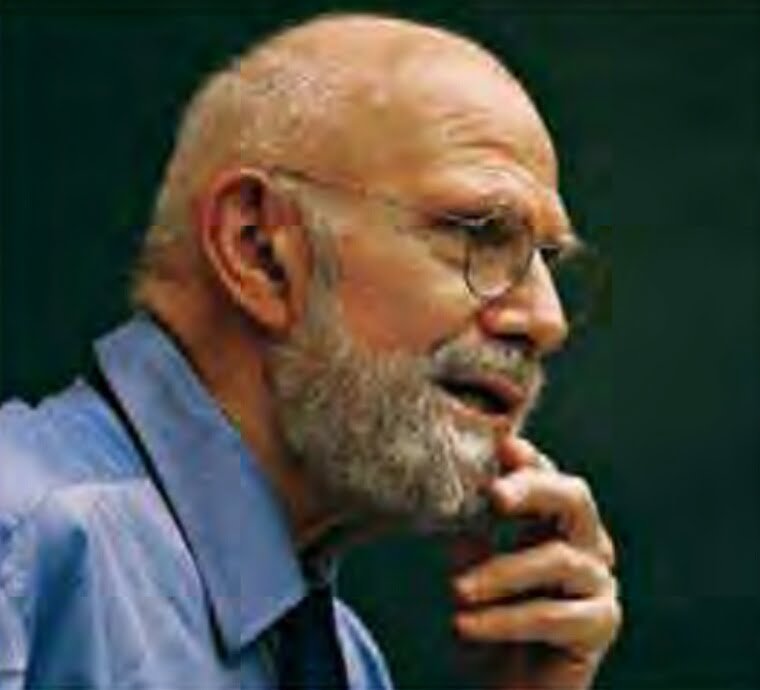
Oliver Sacks

FIRST THEY felt hyperactive and frenzied. Then their body motions became more violent, and they would twitch and convulse. Finally, they fell into a deep trance. And there they remained, these sufferers of the disease encephalitis lethargica, until neuroscientist Oliver Sacks found them in the 1960s-40 years later. As depicted in the movie Awakenings (1990), Sacks gave them L-dopa, which the brain transforms into dopamine. The dopamine levels in the postencephalitic patients had been greatly diminished by their disease. The patients woke up from their stupor, and health seemed to be restored to them.
BALANCING ACT ( THE BRAIN’S EQUILIBRIUM )

BALANCING ACT ( THE BRAIN’S EQUILIBRIUM )

Some feedback mechanisms suppress actions in the brain and body. Others excite them. Their delicate balance keeps the body between extremes. To have too much or too little of one can throw the system out of whack.

To take one example, the lack or overabundance of neurotransmitters such as dopamine causes health problems-Parkinson’s disease in one case, schizophrenia in the other. Because the brain and body are so closely interrelated you could think of the glands, organs, bones, muscles, and other parts of the body as functionally integrated appendages of the brain damage to the brain and the rest of the nervous system can knock the body dangerously out of homeostasis.

Transplants of fetal neurons producing dopamine show promise as a Parkinson's treatment.

Physical damage to the brain is an obvious source of homeostatic imbalance. Shrapnel from an artillery shell, tumors and lesions that anse organically, and atrophy or death of neural groups in the brain reduce and sometimes destroy the brain’s ability to monitor the body and respond to its needs. Headaches, seizures (and epilepsy in particular), diabetes, and Parkinson’s disease are examples of the consequences of a body getting out of a healthful dynamic balance.

BALANCING ACT

Treatments vary. Neurochemical treaments seek to replace the dopamine depleted by the death of the brain’s dopamine producing cells. Drugs like levodopa, also known as L-dopa, are able to pass through the blood-brain barrier. Once inside the brain, L-dopa is transformed into dopamine. It works only up to a point, and it can have side effects, including hallucinations. Furthermore, as the disease progresses, larger and larger doses are required to get the same benefits, with an increased risk of bad reactions. The drug interferes with other neurotransmitters, so large doses often have multiple reactions.

DELICATE BALANCE – THE BRAIN’S EQUILIBRIUM [ HEMOSTASIS ]

DELICATE BALANCE – THE BRAIN’S EQUILIBRIUM [ HOMEOSTASIS ]

THANKS TO THE autonomic nervous system, the human body pretty much takes care of itself without conscious effort. The weather changes but core temperature is maintained, food gets digested, cycles of sleeping and waking follow upon one another, and the body’s status remains fairly even from one day to the next. It’s a system in a delicate balance, self-regulating in an attempt to keep the entire body stable and healthy.

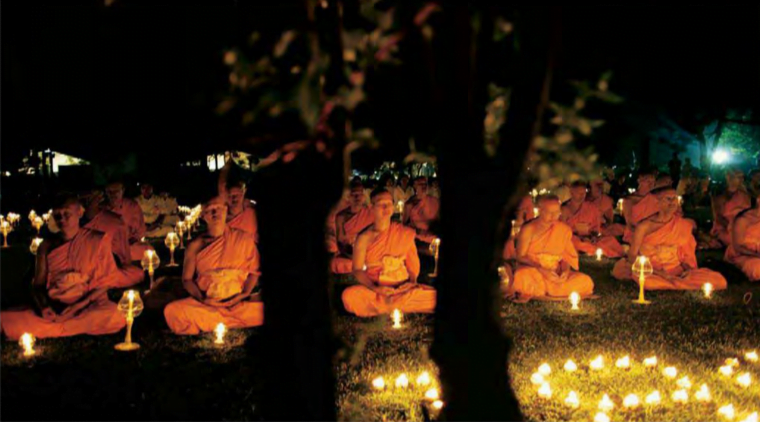
Buddhists in Java engage in meditation, which has been found to decrease stress and anxiety and promote calm feelings.

ABOUT ONE in a hundred Americans older than age 65 suffer from Parkinson’s disease, a neurological condition that mysteriously kills off cells in the brain. They include preacher Billy Graham and former Attorney General Janet Reno. Younger people, like actor Michael J. Fox, can also be stricken with the disease. Symptoms of the disease first appear with the onset of small tremors during voluntary movements. Over time, it becomes harder to initiate motion. Finally, muscles grow rigid, and even making the simplest movements takes extended time and effort. The condition is caused when cells in a region of the brain beneath the cortex that produces and stores the neurotransmitter dopamine die. This region, including the basal ganglia and an area called the substantia nigra (because it appears black in autopsies ), plays a key role in coordinating movement.

HOMEOSTASIS

American physiologist Walter Cannon came up with the word homeostasis to refer to the body’s ability to stay relatively stable while internal and external environments are changing. While homeostasis literally means “unchanging,” the body does indeed change when sensory receptors detect changes in the environment and automatically react, causing the release of appropriate neurotransmitters and hormones to help the body adapt to the world around it. The body then reacts to the changes, those alterations get fed back into the nervous system, and the process repeats itself.

This is known as dynamic equilibrium. It occurs when change after change keeps the body healthy. And it’s complicated. Think of the body’s constant need to adjust heartbeat and respiration, regulate temperature, as well as maintain the smooth functioning of neurons throughout it. Think of how distracting it might be if the brain didn’t adjust to our environment on a regular basis; hearts would beat rapidly long after a moment of fear had passed; the body wouldn’t adjust to changes in temperatute. The unconscious efforts of the brain go by virtually undetected as the body goes about its business.