Category Archives: RECEPTION [ MESSENGERS ( THE NERVOUS SYSTEM ) ]

GOOD FEELINGS / PLEASURE CENTERS [ THE NERVOUS SYSTEM ]

GOOD FEELINGS / PLEASURE CENTERS [ NERVOUS SYSTEM ]

GOOD FEELINGS

Pleasure also has its centers In the brain. A Tulane University neurologist stumbled across one such center in the 1950s when he tried to electrically stimulate the brains of schizophrenics to break them out of their passivity. His patients told him their implanted electrodes created pleasant sensations. The neurologist, Robert G. Heath, seized upon the results, focused his attention on the brain’s pleasure centers, and published the 1964 book The Role of Pleasure in Behavior.

Together with the discovery of pain centers in the brain, research on the physical causes of the sense of pleasure seemed to prove the ancient wisdom that humans seek to act in ways that bring them pleasure and reduce or avoid pain. New paths of investigation have led to innovative treatments for addiction, which is a form of behavior based on compulsive forms of pleasure seeking. PET scans reveal how drugs such as cocaine and heroin activate the brain’s pleasure centers. Cocaine, for example, blocks a neuron’s reuptake mechanism, which causes dopamine to linger in the synaptic cleft.

PLEASURE CENTERS

Joy, happiness, pleasure-what-ever you want to call the positive feelings that bring rewarding sensations and make life worth living-arise from the sensations of security, warmth, and social well-being combined with an awareness of the rightness of such feelings. A healthy brain recognizes the conditions that give rise to pleasure and responds to them appropriately. An unhealthy brain, or one that has learned negative behaviors such as addiction, can miss out on experiencing life’s joys. Both are primarily a matter of chemistry.

GOOD FEELINGS / PLEASURE CENTERS [ THE NERVOUS SYSTEM ]

The sensation of pleasure registers in several brain regions, including significant centers in the hypothalamus and nucleus accumbens , which lies below a portion of the basal ganglia linked to movement. All such pleasure centers rely on the chemical work performed by endorphins and neurotransmitters, particularly dopamine, to create and sustain a happy mood. Experiments with rats have demonstrated the key role of dopamine. In the 1950s, scientists wired rats’ brains so that when they pressed a bar, they received a mild electric shock to the hypothalamus. This stimulation registered as pleasure; the rats would rather press the bar than eat. However, in later experiments, rats wired for self-stimulation first received injections of drugs that block the receptors where dopamine normally binds, denying its pleasure-giving action. The rats no longer felt a pleasant reward from pressing a lever to stimulate their brain, and they stopped doing so. When humans take a similar dopamine-lowering medication, often in order to ward off hallucinations and other psychotic behavior, the drug’s success comes at a price. Delusions may leave, but so do joy and motivation. Conversely, drugs like amphetamines that increase the activity of dopamine in the brain lower the threshold for the perception of pleasure. Too much of a drug-induced pleasant sensation, however, can lead to addiction and manic moods.

When the skin warms, the sympathetic division of the autonomic nervous system dilates blood vessels near the surface and activates the sweat glands. When body temperature cools, the autonomic nervous system narrows surface vessels to send blood to deeper, more vital organs.

“The greatest pleasure of life is love,” said the Greek playwright Euripides nearly 2,500 years ago. Like other forms of pleasure, love is processed by brain chemistry, specifically by heightened levels of neurotransmitters in the pleasure centers. MRI scans of the brain relate the feeling of lust to estrogen and androgens; attraction-more emotional than physical-appears to be associated with serotonin and dopamine. The brain chemistry that supports long-term relationships such as lifelong commitment has been harder to pin down.

Playing key roles in the sensation of pleasure are oxytocin, endorphins, and phenylethylamine , or PEA, sometimes called the love drug. These chemicals help foster the “high” felt in the first stages of love, as well as the euphoria some-times reported by long-distance runners. Even a small pleasure, such as finding your lost car keys, begins with a tiny rise of these and similar neurotransmitters in the brain’s pleasure centers.

DEGREES OF PAIN [ THE NERVOUS SYSTEM ]

DEGREES OF PAIN [ THE NERVOUS SYSTEM ]

Similar pains don’t always register with the same intensity. Although nearly all humans-besides the very few who lack the ability to feel pain recognize extreme heat or a deep cut as painful, they can react differently. Some tolerate pain more easily, whereas others feel it more intensely. Physical, cultural, and psychological variables may also influence a person’s individual degree of pain tolerance.

Cultural and psychological influences on an individual’s tolerance of pain are more ethereal and hard to measure than physiological influences. During World War II, British soldiers injured in the brutal fighting at Anzio, Italy, in 1943 routinely refused morphine to kill their pain, while civilians who suffered far less serious wounds demanded it to ease their pain. The surgeon who noted the difference came to the conclusion that certain kinds of pain could be a matter of mind, not of the body.

Ritual mortification of the flesh at the Hindu festival of Thaipusam in Malaysia demonstrates the power of brain over pain.

Long-term, intense pain can create a different perception in the brain. This chronic sensation may confuse the central nervous system and result in hyperalgesia, or pain amplification. Such pain registers on the same kind of synaptic receptors that are activated during certain kinds of learning. Under the worst- case scenarios, the chronic pain causes the spinal cord to “learn” hyperalgesia, and pain’s sensitivity increases. Examples include the lingering pain of phantom limbs-the sensation of pain from an amputated arm or leg.

Neural networks that process stimuli from a limb remain primed to respond to signals even after it’s gone. Random signals may get misinterpreted as tingling, itching, pain, or some other sensation. Neuroscientist Vilayanur Ramachandran found he could create sensations in phantom limbs by applying pressure to various skin surfaces. His conclusion: The cerebral cortex relocated sensation pathways associated with the old limb. These pathways may always have existed in a weak state, but loss of the limb amplified them. Unfortunately, neural networks that continue to recognize “pain” signals from a missing limb become more strongly primed to repeat the mistake. Treatments for phantom pain range from drug therapy to acupuncture and deep brain stimulation. Newer treatments, using mirrors or virtual reality goggles, trick the brain into thinking it can control the amputated limb.

PATHWAYS/GRAY MATTER [ MESSENGERS ( THE NERVOUS SYSTEM ) ]

PATHWAYS / GRAY MATTER [ MESSENGERS ( THE NERVOUS SYSTEM ) ]

PATHWAYS

Pain signals take rwo tracks on their way to the brain. The express line, like a nonstop train between cities, sends signals through the spinal cord and connects directly to the thalamus. While some pain signals are diverted along the way, those that reach the thalamus are relayed to the cerebral cortex, where they quickly get analyzed.

When you cut your finger while slicing an onion, the quick pathway of pain activates the cortex to figure out how much pain you feel and where you feel it. The brain’s quick recognition of the danger may stop you from bringing down the knife blade again and slicing your finger a second time.

The other, slower pathway travels through slow, narrow nerve fibers with frequent synaptic connections, lumbering like a commuter train that stops at every little burg. These sensations register in the brain stem and hypothalamus, as well as in other deep brain regions, before a portion of them reach the thalamus. Effects include longer-lasting aches as well as emotional reactions to pain, such as the sheepishness of realizing you injured yourself through either clumsiness or negligence (or both). These slow-action pains include the unremitting discomfort of chronic diseases such as cancer.

GRAY MATTER

But not all pain sensations terminate in the thalamus. Many halt at a portion of the brain stem known as the mesencephalic central gray matter. It’s a tiny spot that is difficult to locate. But as a conver gence zone for pain impulses, this area is highly sensitive. When lab animals have their mesencephalic gray matter stimulated by electricity, they can be operated on without painkillers. Yet they maintain their sensitivity to touch, heat, and other sensations in the pain- affected body parts.

PATHWAYS / GRAY MATTER [ MESSENGERS ( THE NERVOUS SYSTEM ) ]

CAPTAIN AHAB asked his ship’s carpenter for a special bit of work in the novel Moby-Dick. Ahab, who had lost a leg to the teeth of a white whale, hoped a replacement limb might expunge the feeling of “another leg in the same identical place with … my lost leg.” “Phantom” limbs, such as Ahab’s lost leg, have been reported since ancient times. American neurologist Silas Weir Mitchell cataloged many varieties in the Civil War. About 70 percent of phantom limbs proved excrUCiatingly and chronically painful. How could a missing leg create the illusion of existence, or even pain? The answer lies in the brain.

BIG PAIN [ MESSENGERS ( THE NERVOUS SYSTEM ) ]

BIG PAIN [ MESSENGERS ( THE NERVOUS SYSTEM ) ]

It turns out, the brain has automatic defenses cued up for a quick response to more serious pain. The perception of pain warns the brain of actual or potential tissue damage. The brain’s recognition of pain sets in motion actions to reduce or remove it, and thus the threat.

Most pain receptors consist of the bare ends of sensory nerves embedded throughout all body tissues, except the brain, whose cells cannot experience sensation. These noclceptors react to any ”noxious” stimulation, anything that damages the body’s cells.

Damage makes the cells release chemicals that activate neurotransmitter receptors (substance P is the transmitter for pain) and send pain signals via the peripheral nervous system to the central nervous system, where it may take a while to be felt. Pain doesn’t reach the brain instantly because of the distance the signal must travel; in a tall man, injury to the toe may take rwo seconds to register in the brain.

In the skin, muscles, and joints, cell damage is likely to cause relatively brief and sharp pains. That’s because nerve cells in the spinal cord release natural pain suppressants known as enkephalins, which inhibit the discharge of more pain-exciting neurotransmitters and keep the sensation short. As a result, sharp pains usually fade into dull aches.

Deeper cell damage is more likely to create burns and aches that last longer. The difference lies in the kinds of nerve fibers that transmit the pain signals, and how quickly that information travels.

ASPIRIN
ASPIRIN

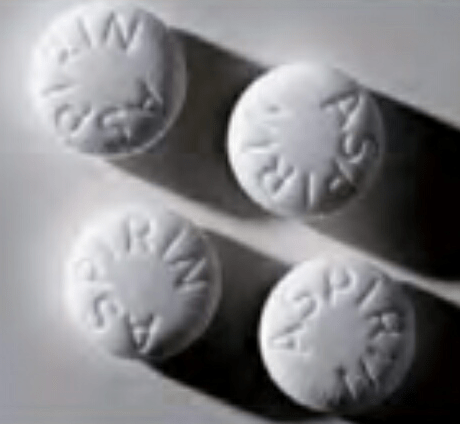
HIPPOCRATES, the founder of modern medicine, knew that chewing willow bark alleviated pain. Thousands of years later, scientists discovered why: The bark contains salicylic acid. When cells are damaged, they release an enzyme called cyclooxygenase-2. That chemical in turn produces prostaglan-din, which signals to the brain that part of the body is in pain. Prostaglandin also causes the injured flesh to swell and become inflamed. Salicylic acid binds to cyclooxygenase-2, blocking the creation of prostaglandin. Less prostaglandin means fewer pain signals reaching the brain, and less inflammation of the cells around the injury.


Damage to the internal organs, or viscera, usually results in dull aches, burning sensations, and gnawing pain. As the pathways for the visceral and somatic nerves of organs and body converge in the spinal cord, the brain sometimes gets confused and assigns visceral pains to other parts of the body that are not actually injured. A heart attack, for example, may seem to cause shooting arm pams.

PAIN GATEWAY [ MESSENGERS ( THE NERVOUS SYSTEM ) ]

PAIN GATEWAY [ MESSENGERS ( THE NERVOUS SYSTEM ) ]

The nervous system does have natural responses that can ease minor pains, like the sting of a scrape or ache of a bump. When you were a child and trying to learn to roller-skate, perhaps you once fell and skinned your knee. To stop your tears, Mama may have given you a kiss, rubbed the area around the injured flesh, cleaned up the wound, and given you a bandage to show off to your friends. Miraculously, you felt better.

Turns out it was no miracle. Mama really did know best According to research published in the 1960s about the so-called gate control theory of pain, stimulation of the injured skin through rubbing temporarily overwhelms the brain. These tactile sensations send a second set of sensations along the bundles of nerve fibers whose neighbors are already sending pain signals to the brain. As the brain doesn’t have the ability to entirely focus on multiple tactile sensations at once, the second set of sensations (the mother’s touch) lowers the perceived intensity of the first set (the skinned knee). The gateway to pain closes a bit. Researchers call this competitive inhibition.

PAIN GATEWAY [ MESSENGERS ( THE NERVOUS SYSTEM ) ]

Rubbing also results in the release of natural painkillers that act like opiates. They interact with receptors in the synapses of the amygdala and hypothalamus. Those collections of neurons, in turn, send signals via the medulla and spinal cord to offset the afferent pain signals from the nociceptors. The result: a decrease in the transmission of pain sensations. That’s great for a skinned knee. But what if the pain is more acute, or even life-threatening?

RECEPTION [ MESSENGERS ( THE NERVOUS SYSTEM ) ]

RECEPTION [ MESSENGERS ( THE NERVOUS SYSTEM ) ]

A healthy brain needs a constant stream of incoming information. Picture what happens without it: When volunteers enter a sensory deprivation tank a body temperature pool of water in which they are forced to go without sights, sounds, smells, tastes, and skin sensations they begin to hallucinate; their brain creates stimuli to stay occupied. Insanity awaits those whose brain starves for external stimulation. Conversely, a healthy body needs the brain to send it signals. Deprived of adequate motion because of nerve damage or a sedentary lifestyle, for example, once strong muscles of the body will quickly atrophy.

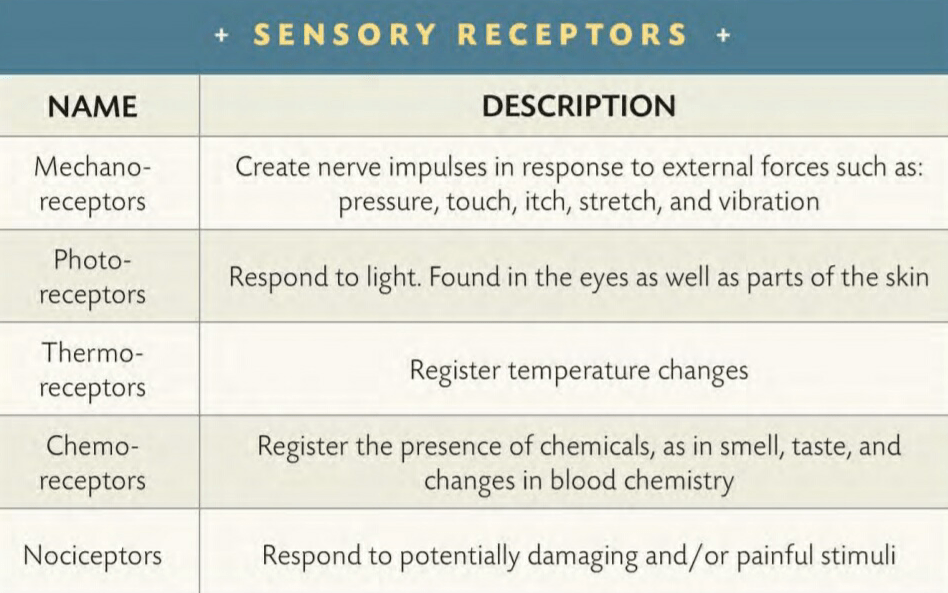
Sensory receptors come in five types. The mechanoreceptors create nerve impulses when their physical shape changes in response to external force, such as pressure or touch.

Touching a devil's club thorn stimulates pressure-sensitive mechanoreceptors and, possibly, pain-sensitive nociceptors in the fingertips.
Touching a devil’s club thorn stimulates pressure-sensitive mechanoreceptors and, possibly, pain-sensitive nociceptors in the fingertips.

Photoreceptors respond to light. Curiously, not all photoreceptors exist in the eyes; some are found in the skin. Scientists at Cornell University and at White Plains, New York, found they could combat jet lag and insomnia by shining lights on the back side of the sufferer’s knees. Thermo receptors register heat and cold. Chemoreceptors register the presence of chemicals, such as the sugars in an orange when you bite into it.

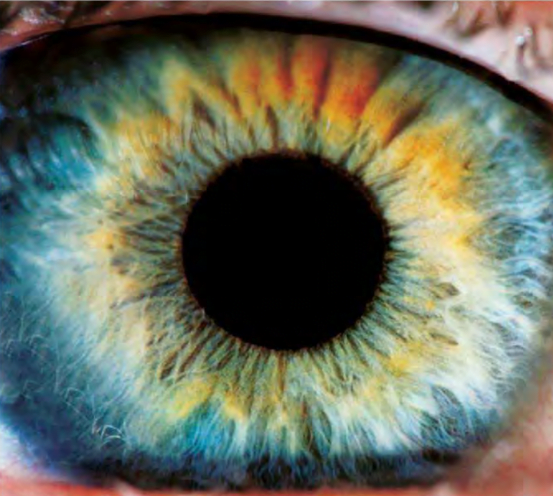
Photoreceptors in the eye begin the neural circuitry that registers sensations of visible light.

And last are the nociceptors, which respond to external stimuli that have the potential to create, or do create, pain. The body needs to process painful feelings in order to warn it of possible larger dangers that pose threats to life and limb.

SENSORY RECEPTORS

Nociceptors are able to act in concert with other sensory receptors. For example, the warmth of a fire on a wickedly cold day feels good on the feet because it stimulates thermo receptors in the skin. If the toes get too close to the flames, however, extreme heat activates the nociceptors and the sensation changes from pleasure to pain.