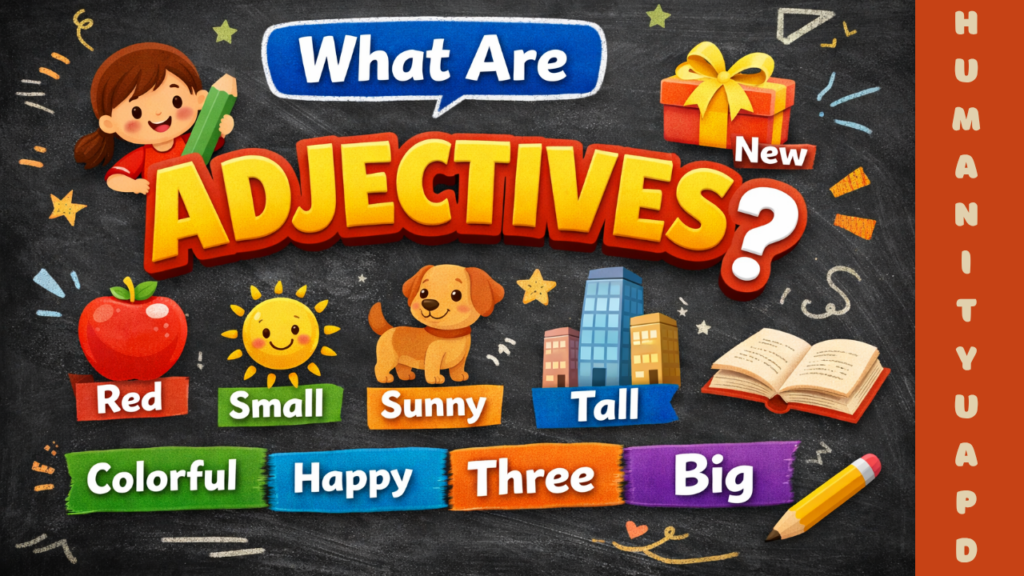
What Are Adjectives?
Adjectives are an essential part of speech in the English language, serving as describing words that provide valuable information about people, places, animals, and things. They play a critical role in enriching sentences by adding detail and context. Without adjectives, our communication would be bland and lack the necessary depth to capture the reader’s interest.
These versatile words help paint a clearer picture in our minds. For instance, instead of simply stating “the car,” using an adjective transforms the phrase to “the red car” or “the speedy car,” thereby evoking more imagery and eliciting a more engaging response from the reader. By employing adjectives effectively, speakers and writers can express emotions, convey specific characteristics, and enhance clarity in their messages.
Adjectives can describe various attributes, such as color, size, shape, age, and quality. For instance, one might refer to a “large blue elephant” or a “brand new smartphone.” These descriptive words enable one to categorize and differentiate objects or subjects in a precise manner. Additionally, adjectives can be used comparatively to express variations, such as in the phrases “taller than” or “more beautiful than,” allowing for more nuanced communication.
In the realm of writing, adjectives are instrumental in transforming ordinary sentences into vivid expressions that resonate with readers. By incorporating appealing adjectives into narratives, authors can draw attention to specific details and create an immersive experience. In summary, adjectives function as the detailing brush in the canvas of language, bringing words to life and allowing us to convey a richer tapestry of meaning.


You must be logged in to post a comment.