Tag Archives: best country to live

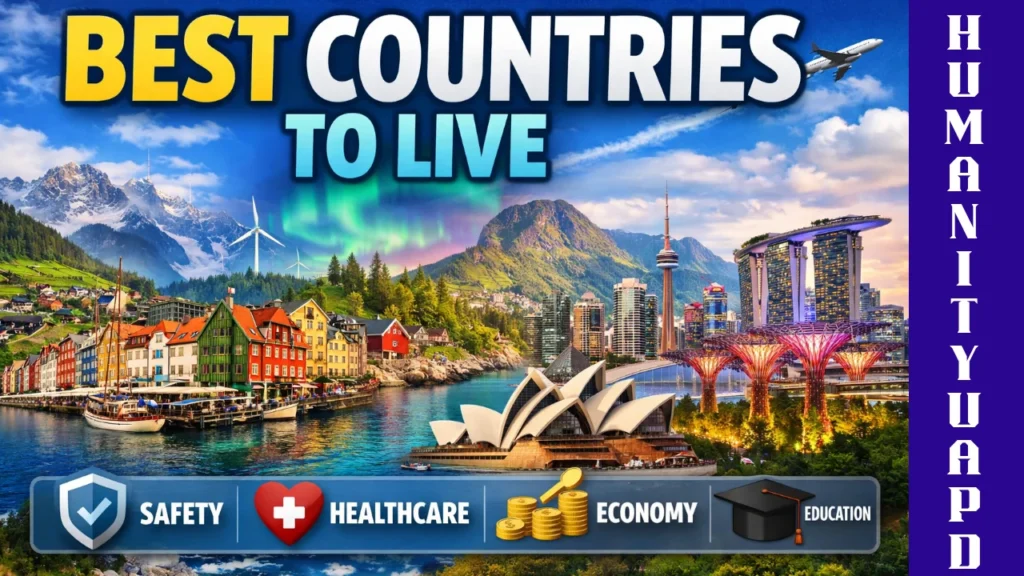
🌍 Best Countries to Live in (2026) | Top 10 for Quality of Life

Best Country To Live

Best Country To Live

Assessing the livability of countries involves a systematic and empirical approach that relies on various science-based metrics. With globalization and an increasing number of expatriates, individuals are seeking environments that not only align with their personal preferences but also support their overall well-being. By employing quantifiable measures, we can ascertain which countries offer the most favorable conditions for living.

The parameters used to evaluate a country’s livability are crucial components in this analysis. Quality of life is frequently measured through criteria such as safety, recreational opportunities, and cultural experiences. Economic stability is another significant consideration; countries with strong and resilient economies tend to provide better job opportunities and social welfare, enhancing the overall living conditions.

Environmental factors are equally important; a country’s natural surroundings, air and water quality, and sustainability efforts directly influence the health and happiness of its residents. Similarly, the education system plays a pivotal role in determining a nation’s livability by affecting literacy rates, access to knowledge, and workforce competency. Lastly, healthcare systems are an essential metric, as they determine the quality and accessibility of medical services that citizens can rely on during times of need.

This science-based analysis endeavors to illuminate various countries through the application of these multidimensional metrics. By meticulously examining and comparing the relevant indicators, we aim to provide a comprehensive understanding of what makes a country an optimal place to live. Each section of this post will delve into the particulars of these metrics, comparing selected nations and elucidating the factors that contribute to their overall livability.

Daily writing prompt
What’s something most people don’t understand?

Australia 🇦🇺 vs Canada 🇨🇦 – Which country is better in 2026 for living, jobs, study, and immigration?

Australia and Canada

Australia and Canada

Australia and Canada are two prominent nations located in the Southern and Northern Hemispheres, respectively. Australia, an island continent and the sixth-largest country in the world by total area, covers approximately 7.7 million square kilometers. It is recognized for its diverse ecosystems, including deserts, tropical rainforests, and the famous Great Barrier Reef. According to the latest statistics, Australia has a population of roughly 26 million, with major urban centers like Sydney, Melbourne, Brisbane, and Perth that contribute significantly to its cultural and economic landscape.

Canada, on the other hand, is the second-largest country globally, spanning about 9.98 million square kilometers. Positioned in North America, Canada shares the longest international land border with the United States. The nation has a diverse landform ranging from tundra to vast forests and mountain ranges, contributing to its rich natural heritage. The Canadian population is estimated at around 38 million, with major cities such as Toronto, Vancouver, Montreal, and Calgary being key cultural hubs.

Both countries are distinguished by their unique historical trajectories. Australia was colonized by the British in the late 18th century and developed into a nation characterized by its multicultural society today. In contrast, Canada boasts a history marked by Indigenous peoples, French and British colonization, and subsequent confederation in 1867, which established its status as a self-governing dominion within the British Empire. These historical backgrounds not only shape their present-day identities but also influence various facets of society, governance, and international relations.

This introductory section will illuminate the significant characteristics that define Australia and Canada, while also setting the groundwork for a deeper comparative analysis of their environments, economies, and societal structures.