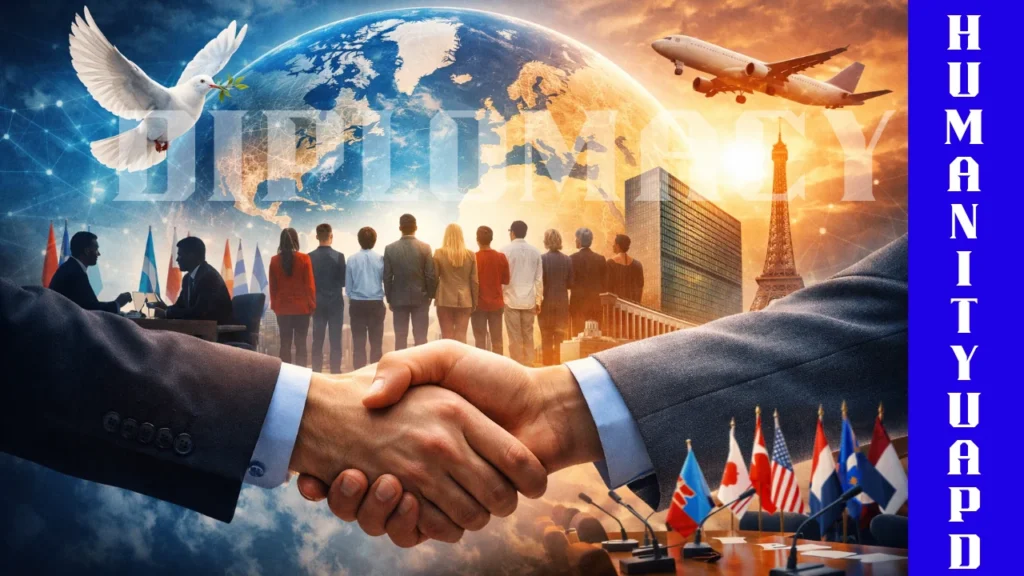
Diplomacy
Diplomacy serves as a fundamental aspect of international relations, representing the process through which countries negotiate and manage their interactions with one another. At its core, diplomacy involves the art of communication, negotiation, and problem-solving among global actors, including nations, intergovernmental organizations, and non-state actors. It essentially establishes and maintains relationships that shape a nation’s foreign policy and international standing.
The significance of diplomacy cannot be understated. It plays a critical role in preventing conflicts, promoting peace, and fostering cooperation on global issues such as trade, human rights, and environmental sustainability. Through diplomatic channels, states engage in discussions to address mutual concerns and formulate agreements, which can result in treaties and international accords. This cooperative spirit not only enhances bilateral relationships but also contributes to regional and global stability.
Historically, diplomacy has evolved significantly. From the ancient practice of envoy missions in Mesopotamia to the intricate multilateral negotiations of today, diplomacy reflects changes in political structures, technological advancements, and societal norms. The emergence of international law and organizations, such as the United Nations, has further transformed the landscape, making diplomacy a vital component in fostering international collaboration.
The main objectives of diplomatic efforts can be summarized as advancing national interests, ensuring national security, promoting international cooperation, and enhancing economic ties. Modern diplomacy adapts itself to include public diplomacy, cultural exchanges, and new media interactions, reflecting the complexities of contemporary international relations. Understanding these dimensions of diplomacy is crucial for comprehending the scientific underpinnings that govern state interactions on a global scale.




You must be logged in to post a comment.