Tag Archives: Healthy lifestyle

High-Calorie Sports Nutrition | April 2026

High-Calorie Sports Nutrition

High-Calorie Sports Nutrition

High-calorie sports nutrition is integral for athletes and active individuals aiming to maximize their performance, endurance, and recovery. The fundamental concept revolves around providing the body with an ample amount of calories to fuel strenuous physical activities, promote muscle growth, and expedite recovery processes. Unlike casual exercisers, athletes often engage in intensive training regimens and competitions that demand significantly higher energy expenditure. Thus, understanding and implementing a high-calorie diet is crucial for maintaining efficacy and achieving peak performance.

A high-calorie sports nutrition plan primarily targets athletes who require increased caloric intake due to their rigorous physical demands. This includes but is not limited to endurance athletes such as marathon runners and cyclists, power athletes like weightlifters and sprinters, and team sport athletes such as football and basketball players. Each of these athletes has unique energy needs based on their specific sport’s intensity and duration, and a well-structured nutrition plan ensures they meet these needs efficiently.

Equally important is recognizing that high-calorie nutrition isn’t merely about increasing one’s food intake. It involves strategically consuming nutrient-dense foods rich in essential macronutrients; carbohydrates for energy, proteins for muscle repair and growth, and fats for sustained energy. Thus, fine-tuning one’s diet to balance these macronutrients is paramount to harnessing the full benefits of a high-calorie strategy.

Ultimately, the goal of high-calorie sports nutrition is to optimize the athlete’s overall physical output and recovery. By prioritizing a tailored high-calorie dietary approach, athletes can enhance their training results, reduce injury risks, and maintain higher energy levels throughout their activities. As we explore further into this subject, we will delve into specific dietary plans, food choices, and timing strategies that contribute to a successful high-calorie sports nutrition regimen.

Daily writing prompt
If you could be a character from a book or film, who would you be? Why?

Home Gym | humanityuapd.com | 2026 | HUMANITYUAPD

Home Gym

Home Gym

The concept of a home gym has garnered substantial attention and popularity in recent years. With the increasing emphasis on health and wellness, many individuals are seeking convenient and cost-effective alternatives to traditional gym memberships. A home gym offers the unique advantage of exercising within the comfort and privacy of your own space, thereby eliminating the need for commutes and gym schedules.

One of the primary benefits of having a home gym is its unparalleled convenience. Whether you are a morning person or prefer late-night sessions, a home gym is accessible 24/7. This flexibility ensures that your fitness regimen can seamlessly fit into your daily routine without the constraints of gym hours.

Moreover, the financial aspect cannot be overlooked. While the initial setup of a home gym might require a considerable investment, it can result in significant cost savings over time. By eliminating monthly membership fees and commuting costs, a home gym can be a more economical fitness solution in the long run.

Another compelling benefit of a home gym is the ability to personalize the workout environment entirely to your preferences and needs. From choosing the equipment that suits your fitness goals to creating an ambiance that motivates you, the customization possibilities are endless. This personalized touch often leads to a more enjoyable and effective workout experience.

Home gym setups can vary widely, accommodating a range of fitness levels and space constraints. A basic setup might include essential equipment like dumbbells, resistance bands, and a yoga mat, ideal for beginners or those with limited space. On the other hand, an advanced home gym might feature sophisticated machines like treadmills, rowing machines, and multi-functional workout stations. Regardless of the setup, the primary objective remains the same: to create a conducive environment for maintaining and enhancing physical health within the comfort of home.

Daily writing prompt
What job would you do for free?

Stretching For Men | New Update | HUMANITYUAPD | 29 March

Stretching for Men: 7 Powerful Benefits You Need

Stretching For Men: Why Men Should Stretch

Stretching is often an overlooked yet critical component of a well-rounded fitness regimen. For men, integrating stretching into daily routines can yield substantial physical and mental benefits, contributing not only to immediate well-being but also to long-term  health. One of the most significant advantages of stretching is increased flexibility. Improved flexibility enhances muscle function and joint range of motion, allowing for smoother and more efficient movement patterns in various activities, from daily tasks to athletic endeavors.

Performance enhancement is another compelling reason for men to embrace stretching. For athletes and fitness enthusiasts, better flexibility can lead to improved athletic performance. Stretching prepares the muscles for the mechanical demands they will face, optimizing their function and potentially enhancing overall sports performance. Additionally, consistent stretching can reduce the risk of injuries by maintaining the muscles’ suppleness and adaptability, thus preventing strains, tears, and other common exercise-related injuries.

Mental clarity and stress reduction are equally important benefits that stretching offers. Engaging in regular stretching routines can promote relaxation, decrease muscle tension, and elevate mood, fostering a sense of mental well-being. This aspect is particularly important for managing daily stresses and achieving a balanced lifestyle.

Despite its evident advantages, stretching is clouded by misconceptions. Many people assume that stretching is either unnecessary or only suitable for certain activities like yoga. In reality, stretching is beneficial regardless of one’s age or fitness level. It should complement all types of physical activities, including strength training, cardiovascular exercises, and even sedentary routines. This indispensable practice can and should be a part of every man’s fitness regimen.

Incorporating regular stretching not only enhances physical performance and reduces the risk of injury but also boosts mental focus and relaxation. By dispelling common misconceptions and understanding its multifaceted benefits, men can optimize their overall health and fitness through the simple act of stretching.

Daily writing prompt
What makes you laugh?

Body Mass Index (BMI) – Free Tools (HUMANITYUAPD)

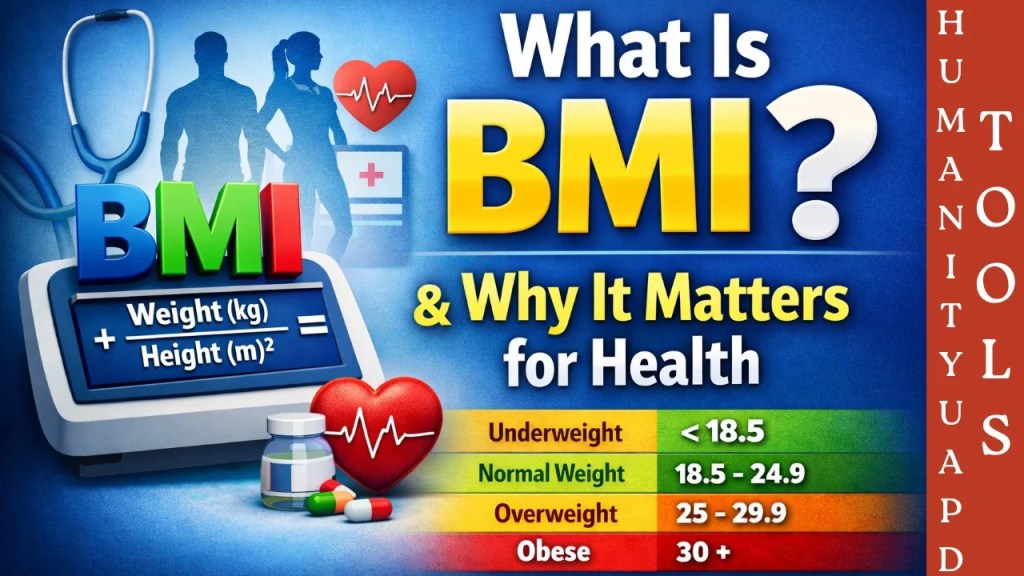
BMI (Body Mass Index)

Body Mass Index, commonly referred to as BMI, is a widely used tool designed to assess body weight relative to height. The calculation is straightforward; it divides an individual’s weight in kilograms by the square of their height in meters. The formula is represented as follows: BMI = weight (kg) / (height (m) x height (m)). This simple mathematical equation provides a numerical value that can indicate a person’s weight status, which may be categorized as underweight, normal weight, overweight, or obese.

The origins of BMI date back to the 1830s when the Belgian mathematician Adolphe Quetelet developed this index to study the relationship between weight and height in the general population. Although initially intended for statistical purposes rather than individual health assessments, BMI gained traction as a method to evaluate body weight and its association with health risks.

BMI serves primarily as a population-level measure; it is not intended for clinical diagnosis or assessment of fat distribution in an individual. However, it offers a quick way to identify potential weight-related health risks and categorize individuals for further evaluation. Public health organizations, including the World Health Organization (WHO), utilize BMI as a standard index for assessing overweight and obesity trends in populations, making it a vital tool in public health surveillance.

Given the wide acceptance of BMI, it is important to recognize its limitations. It does not account for factors such as muscle mass, bone density, and overall body composition. Consequently, while BMI is a useful initial assessment tool, it should be complemented by other health assessments for a comprehensive understanding of an individual’s health status.