Tag Archives: Learn English absolutely free

Final English Revision: Complete Practice After 28 Days of Learning English

Final English Revision

Final English Revision

After completing a 28-day course in English, many learners often feel a sense of accomplishment and excitement about their newfound knowledge. However, it is equally important to understand that reviewing what you have learned is a critical step in the language acquisition process. The significance of revision extends beyond mere memory recall; it is a powerful tool that strengthens understanding and boosts confidence in utilizing English effectively.

When we engage in revision, we consolidate our recall of vocabulary, grammar, and sentence structures. This not only solidifies our current knowledge but also enhances our ability to  communicate more fluently. The act of revisiting previously learned material enables the creation of stronger neural connections, making information retrieval easier in the future and thereby facilitating smoother conversations. This is particularly vital for beginners who may still be struggling with the foundational elements of the language.

Moreover, revising can serve as a precursor to application. By reflecting on the concepts learned over the past weeks, learners can gain clarity about areas they may find challenging. This self-awareness helps them identify specific topics that require additional focus, which is essential for personal growth and language mastery. The enhancement of one’s confidence is a key benefit of revision; as learners refine their understanding, they are more likely to engage in conversations with others, apply the language in practical scenarios, and experience a reduced fear of making mistakes.

In summary, the practice of reviewing English material after a concentrated study period is pivotal. It not only reinforces knowledge but also promotes confidence in using the language in various contexts, ultimately leading to greater fluency and proficiency.


Sounding Natural in English Conversations | Free English Course 2026

Sounding Natural in English Conversations

Sounding Natural in English Conversations

Sounding natural in English conversations is pivotal for effective communication. When individuals engage in dialogue, the quintessential goal is not merely to convey information but to foster understanding and connection. Achieving a natural tone in spoken English enhances interactions, making them more engaging and enjoyable for all participants involved.

Natural English encompasses the fluid use of language, which transcends mere grammatical correctness. It includes idiomatic expressions, appropriate intonation, and an authentic rhythm that mirrors everyday speech. This style allows speakers to connect deeper with their audience, leading to more constructive exchanges. When one sounds natural, it reduces barriers in communication, allowing for the seamless flow of ideas and emotions.

Furthermore, sounding natural can encourage a more relaxed atmosphere in conversations. Participants in a dialogue are more likely to express their thoughts openly when they perceive that the exchange is not overly structured or formal. A conversational style that emphasizes authenticity cultivates an environment conducive to sharing diverse perspectives, thus enriching the interaction.

Additionally, mastering the nuances of natural English can significantly enhance one’s confidence in speaking. Many English learners may worry about making grammatical errors or sounding too formal, which may hinder their willingness to engage in conversations. By focusing on naturalness rather than stringent rules, learners can reclaim their joy in communication. As they progress in their understanding and use of colloquial phrases, they will discover that sounding natural often invites more positive responses from native speakers.

Agreeing and Disagreeing Politely | 28-day Free English Course

Agreeing and Disagreeing Politely

Agreeing and Disagreeing Politely

Mastering the art of agreeing and disagreeing is an essential component of effective communication in English. These skills facilitate meaningful exchanges and foster understanding between individuals. When expressing agreement or disagreement, the way one articulates their thoughts can profoundly impact the dynamics of conversation.

Agreeing allows individuals to show support and affirmation towards another person’s opinion, creating a positive atmosphere. Conversely, disagreeing, when done respectfully and thoughtfully, encourages constructive dialogue and the exchange of diverse perspectives. As such, knowing how to approach these interactions with politeness is paramount. It not only demonstrates respect for the other person’s viewpoint but also enhances the likelihood of a fruitful discussion, even in the face of differing opinions.

Politeness in communication plays a significant role in building and maintaining good relationships. When individuals feel respected and valued in a conversation, they are more likely to engage openly and honestly. This creates an environment conducive to collaboration and mutual understanding. Furthermore, being polite when agreeing or disagreeing can prevent misunderstandings and mitigate conflict, allowing for a smoother exchange of ideas.

Incorporating politeness strategies, such as softening language and using conditional phrases, can transform a potentially contentious conversation into a more amicable discussion. By utilizing phrases like “I see your point, but…” or “I appreciate your opinion, however…”, speakers can navigate disagreements without alienating the other person. Understanding the nuances of agreeing and disagreeing is therefore not only practical but essential for effective communication in various contexts.

Expressing Feelings and Opinions: 28-day Easy and Free English Course

Expressing Feelings and Opinions

Expressing Feelings and Opinions

Expressing feelings is a fundamental component of human interaction and emotional health. Whether through verbal communication, body language, or written expressions, the way we convey our emotions significantly impacts our relationships and overall well-being. Understanding one’s emotions allows individuals to communicate more effectively, reducing misunderstandings and fostering deeper connections with others.

Emotional expression serves several purposes. Firstly, it enables individuals to articulate their internal experiences, leading to greater self-awareness. When people acknowledge and express their feelings, they can process and understand their emotional states better. This understanding is crucial, as it often informs how they react to various situations and how they relate to others.

Moreover, expressing emotions can be vital for mental health. Suppressing feelings can lead to emotional distress, anxiety, and other mental health issues. Conversely, when individuals express their emotions constructively, they contribute to a healthier emotional landscape, allowing for the release of pent-up feelings and opening avenues for dialogue. This practice not only benefits the individual but also enhances interpersonal relationships. Being open about one’s feelings encourages others to do the same, promoting mutual understanding and empathy.

Additionally, effective emotional expression can improve conflict resolution outcomes. By clearly articulating feelings during disagreements, individuals can address the underlying issues more effectively, steering conversations towards a more positive resolution. This element of emotional expression fosters an environment of trust and respect, where individuals feel safe to share not only their joys but also their concerns and frustrations.

English for Travel and Public Places | 28-Day Absolutely Free Course

English for Travel and Public Places

English for Travel and Public Places

In today’s globalized world, English has emerged as a dominant language, particularly in the realms of travel and public places. Whether you are embarking on a journey to a foreign country or navigating the local amenities in your own city, the ability to communicate in English can significantly enhance your experience. This blog post aims to highlight the importance of mastering English for travel purposes, detailing how it can facilitate interactions, improve sightseeing experiences, and foster a deeper understanding of diverse cultures.

When traveling, encountering situations where English is the primary mode of communication is almost inevitable. From checking into a hotel to ordering food at a restaurant or asking for directions, knowing English can serve as a vital tool for overcoming language barriers. Even in regions where English is not the first language, it is often understood by locals in tourist areas. This understanding allows travelers to engage more meaningfully with the people and places they visit.

Moreover, navigating public places such as airports, train stations, and tourist attractions often requires basic communication skills in English. Signs, announcements, and information desks overwhelmingly utilize English, making it essential to grasp at least fundamental phrases and vocabulary. Familiarity with English or simple English expressions can make travel less daunting and more enjoyable.

Encouragingly, learning English for travel is not as demanding as it may seem. Resources abound in the form of language apps, online courses, and conversational practice groups tailored to beginners. With commitment and practice, anyone can develop the necessary skills to communicate effectively while traveling. The aim of this blog post is to provide insights on how acquiring English language skills can enrich your travel experiences and help bridge cultural gaps during your adventures.

English Vocabulary for Daily Life | 28-day Easy Free English Course

English Vocabulary for Daily Life

English Vocabulary for Daily Life

In today’s increasingly interconnected world, a strong command of the English language is essential for effective communication. English vocabulary forms the foundation of daily conversations, making it crucial for beginners to familiarize themselves with basic words and phrases. The ability to express oneself clearly can enhance interactions at work, school, or in social contexts. By expanding their vocabulary, learners empower themselves to share their thoughts, ask questions, and engage meaningfully with others.

Furthermore, English serves as a global lingua franca, spoken by millions across various countries. Having a solid vocabulary equips individuals with the confidence to navigate diverse situations, from casual chats with friends to formal discussions in professional settings. Learning and integrating new words into everyday use can significantly ease the process of engaging in conversations, resulting in more fruitful exchanges.

For beginners, the journey of acquiring English vocabulary may seem daunting; however, it can be approached in a friendly and supportive manner. By focusing on practical words and expressions commonly encountered in daily life, learners can gradually build their language skills without feeling overwhelmed. Engaging with vocabulary that is relatable and relevant allows beginners to quickly see the benefits of their learning, making it a rewarding experience.

Ultimately, the journey of learning English vocabulary is a step towards greater inclusivity and understanding within the global community. As various aspects of life involve communication, investing time to learn essential words serves not just personal growth, but also enriches connections with others. Through this blog post, we aim to provide you with a resourceful guide that will foster your understanding of essential English vocabulary, ensuring you feel equipped to embrace daily conversations with confidence.

Writing Short Paragraphs | Day 23 | 28-day Absolutely Free Course

Writing Short Paragraphs

Writing Short Paragraphs

Writing short paragraphs is a crucial skill, particularly for English learners who seek to improve their writing capabilities. Short paragraphs help convey ideas clearly and succinctly, making it easier for writers to express their thoughts and for readers to understand them. When learners use shorter paragraphs, they often find that their writing becomes more organized and coherent, which is essential in effective communication.

The essence of writing in short paragraphs lies in its ability to break down complex information into manageable segments. Each paragraph can focus on a single idea or topic, allowing readers to digest the content without feeling overwhelmed. This approach not only enhances readability but also encourages writers to develop their ideas more thoroughly, as each paragraph serves as a building block in the overall structure of the text.

For beginners, utilizing short paragraphs can be particularly beneficial. It provides a clear framework that guides them in arranging their thoughts logically. As English learners become accustomed to this format, they may find it easier to articulate their ideas, resulting in more polished and effective writing. In the context of academic or professional writing, this method helps meet standards for clarity and precision, essential traits sought after in any written communication.

In addition, writing short paragraphs can facilitate better engagement with the audience. Readers are more likely to remain attentive when faced with brief, well-structured paragraphs rather than lengthy blocks of text, which can often lead to confusion or disengagement. As learners develop this skill, they will undoubtedly notice an improvement in both their confidence and their ability to connect with their intended audience.

Writing Simple English Sentences | 28-day Absolutely Free Course (2026)

Writing Simple English Sentences

Writing Simple English Sentences

Writing is a fundamental skill that many individuals must master, especially beginners. The process can be daunting at times, yet it remains an essential ability that aids in communication and self-expression. When starting out, it is vital for budding writers to focus on simplicity. Writing simple English sentences helps to build a strong foundation and boosts confidence in their writing journey.

Simple sentences allow beginners to convey their thoughts and ideas clearly without overwhelming themselves or their readers. This clarity is crucial, as the primary aim of writing is to  communicate effectively. By breaking down complex ideas into manageable, straightforward sentences, newcomers can ensure that their message is understood and appreciated.

Moreover, crafting simple sentences also reduces the risk of errors that may arise from more complicated structures, such as run-on sentences or convoluted phrases. As beginners practice writing clearly and concisely, they lay the groundwork for more advanced writing techniques in the future. Importantly, every writer starts as a beginner; thus, embracing this initial phase is essential for growth.

We encourage aspiring writers to practice regularly, as consistency is key to improvement. Experimenting with simple sentence construction can be a rewarding endeavor. With dedication and perseverance, beginners will not only gain the skills needed for effective writing but also develop confidence in their voice and style. Remember, writing is a journey, and everyone has a starting point.

Daily English Speaking Plan | 28-day Absolutely Free English course

Daily English Speaking Plan

Daily English Speaking Plan

Engaging in daily speaking practice is crucial for anyone learning a new language. This routine significantly contributes to building confidence, enhancing pronunciation, and improving overall fluency. When learners make a habit of speaking English every day, they create an environment where they can gradually overcome their reservations about using the language. This consistent exposure enables learners to utilize newly acquired vocabulary and structures in real-time conversations.

Confidence is often one of the most significant hurdles for language learners. By practicing speaking daily, learners familiarize themselves with the sounds and nuances of English, which reduces anxiety over time. As they hear themselves articulate words and phrases, they cultivate a sense of achievement that empowers them to engage more freely in conversations. This newfound assurance encourages learners to express their thoughts and opinions, further enriching their language learning journey.

Moreover, daily speaking practice enhances pronunciation. Regular interaction with the language helps individuals recognize and replicate the subtleties in pronunciation. With continued practice, learners become more attuned to the rhythm and intonation of English, leading to clearer communication. As they articulate phrases and sentences, they can correct their mistakes and refine their skills, making every practice session an opportunity for growth.

Additionally, daily speaking fosters fluency, which is essential for effective communication. When learners speak every day, they reinforce their memory of new words and phrases, making it easier to recall them during conversations. This daily reinforcement builds a solid foundation for language retention and allows for smoother communication, as thoughts can be expressed more swiftly. In essence, regular speaking practice not only enriches vocabulary but also streamlines the learning process, enabling learners to progress at a much quicker pace.

How to Speak English Fluently | Day 22 | 28-day Absolutely Free Course

How to Speak English Fluently

How to Speak English Fluently

Fluency in English refers to the ability to communicate effectively and effortlessly in spoken language. It is characterized by a natural rhythm, appropriate intonation, and the capability to express ideas clearly. Importantly, fluency encompasses not only the speed at which one speaks but also the confidence with which one engages in conversation. Effective communication is the central tenet of fluency, which implies that comprehensibility and the flow of dialogue take precedence over grammatical precision.

For instance, imagine two individuals having a casual conversation at a coffee shop. The first person may speak very quickly, using complex vocabulary but making occasional grammatical errors. The second individual, in contrast, may speak more slowly and simply, yet communicates their thoughts clearly and coherently. Both individuals exhibit fluency in English, albeit in different styles. What matters most is their mutual understanding and ability to share ideas in an engaging manner.

Moreover, the concept of fluency extends beyond individual conversations to discussions in various contexts, such as professional settings, social gatherings, or academic debates. An employee at a workplace presenting a project confidently in front of colleagues exemplifies fluency, as does a student debating a topic in a classroom setting. Each scenario illustrates that fluency is not confined to perfection in language; rather, it is about the comfortable exchange of thoughts, feelings, and information.

In essence, fluency in English means being able to communicate clearly and with ease, enabling oneself to engage in meaningful dialogues without the constraints of perfectionism. This view fosters a more approachable mindset towards language acquisition and encourages learners to focus on improving their communication skills over worrying about making mistakes.

Understanding Native Speakers | 28-day free English course

Understanding Native Speakers

Understanding Native Speakers

Native English speakers are individuals who have acquired English as their first language from an early age. They typically grow up in environments where English is the primary means of communication, allowing them to develop a natural fluency that is often challenging for language learners to emulate. This fluency is characterized by a smooth, uninterrupted flow of speech that is often punctuated by idiomatic expressions, colloquialisms, and even regional dialects. Such complexity can make it difficult for non-native speakers to grasp nuances and contextual meanings in conversations.

One of the key differences between native speakers and language learners is the speed and rhythm of speech. Native speakers often engage in rapid dialogue, utilizing natural intonation and stress patterns that may not be familiar to those still mastering the language. This rapid-fire exchange can lead to misunderstandings, as learners may struggle to keep up with the pace or may misinterpret the meaning of certain phrases. Additionally, native speakers tend to employ a variety of informal expressions that may not appear in textbooks, further complicating comprehension for students.

An essential aspect of understanding native speakers lies in their use of context and non-verbal cues. In everyday conversation, much of the meaning stems from tone, facial expressions, and body language, elements that language learners may need help interpreting, especially in a culturally diverse context. To effectively engage with native speakers, learners must not only focus on vocabulary and grammar but also cultivate their ability to infer meaning from a variety of communication signals.

The differences in linguistic and conversational styles emphasize the importance of exposure and practice. Engaging with native speakers in authentic situations, listening to podcasts, or watching shows can significantly enhance comprehension skills. With time and experience, learners can bridge the gap between their own language abilities and the natural rhythm of native English communication.

Improving English Listening Skills | Day 20 | 28-day Free English Course

Improving English Listening Skills

Improving English Listening Skills

Many individuals embarking on the journey of learning English often encounter feelings of frustration and confusion, especially in the realm of listening. This experience is not uncommon among beginners. The complexity of spoken language, including varied accents, fast-paced dialogue, and idiomatic expressions, can create a significant challenge. As learners attempt to comprehend spoken English, they may struggle to identify specific words or comprehend the overall message, leading to feelings of inadequacy.

It is important to recognize that these feelings of difficulty are entirely natural. Listening is an active process that involves not just decoding words but also interpreting meaning within context. For many, this requires significant mental effort, making it easy to become overwhelmed. Moreover, the rapid nature of spontaneous conversation often adds another layer of difficulty. Unlike reading, where learners can take their time, listening demands immediate understanding, which can be daunting.

However, learners should remind themselves they are not alone in this struggle. Many others share similar experiences, and it is crucial to view these challenges as part of the learning process. Progress may be gradual, but improvement is attainable. By consistently exposing oneself to English through various mediums—such as podcasts, movies, or conversations—learners can gradually tune into the sounds and rhythms of the language. As they persist, they will begin to notice enhancements in comprehension and confidence.

Ultimately, the key is to embrace the journey with patience and resilience. As learners engage with spoken English, they are laying a foundation that will support their linguistic development in the long run. With continued effort and practice, what once seemed difficult will become increasingly manageable, revealing the rewarding beauty of understanding and communicating in English.

English for Online Chats and Messages | 28-day free English course

English for Online Chats and Messages

English for Online Chats and Messages

Online chats have significantly transformed the way people communicate in the 21st century. This technology has evolved from simple text-based exchanges to complex interactions that can include multimedia elements like images, videos, and emoticons. Initially popularized by instant messaging platforms such as AOL Instant Messenger and later by social media networks, the concept of online chatting has become ubiquitous, offering users the ability to connect in real time across various devices.

The importance of English communication within online chats cannot be overstated. As one of the most widely spoken languages globally, English serves as the lingua franca in many digital interactions, fostering better understanding among diverse groups of individuals. Mastering the nuances of chat etiquette, which includes understanding abbreviations, emojis, and tone, is essential for effective communication. This is particularly significant in professional settings where precision and clarity are paramount.

Furthermore, the rise of online communities and forums has illustrated the necessity of proficient English skills. Engaging in these platforms requires not only linguistic competence but also an awareness of cultural contexts that might influence conversations. As users embark on their digital correspondence journey, a solid grasp of English facilitates clearer exchanges and enriches the overall chat experience.

In today’s tech-savvy world, where remote work and online education have become more prevalent, the ability to communicate effectively in English during chats has evolved from a mere convenience to a critical skill. As individuals navigate through these digital landscapes, honing their English proficiency will prove invaluable in both personal and professional interactions.

English for Phone Calls | Day 19 | 28-day free English course

English for Phone Calls

English for Phone Calls

Welcome to our comprehensive guide on mastering English for phone calls, a skill that can greatly enhance your communication abilities. Many beginners often find the prospect of speaking on the phone in English daunting. This apprehension is understandably fueled by several factors including unclear audio, swift speech patterns, and the challenge of translating thoughts from one’s native language into English. These obstacles can make phone calls seem intimidating and overwhelming.

However, it is important to recognize that these challenges are common among learners. Realizing that many individuals share similar experiences can serve as a source of comfort. The good news is that, with consistent practice, the complexities of making phone calls in English can be effectively navigated. The more exposure you have to various phone call scenarios, the more comfortable you will grow.

Over time, these experiences will not only develop your listening skills but also enhance your ability to articulate thoughts and respond dynamically in conversations. Furthermore, learning specific phrases and vocabulary tailored for phone calls can significantly ease this process. By familiarizing yourself with these linguistic tools, you will find that speaking on the phone becomes less of a hurdle and more of a routine task.

This guide is designed to assist you in refining your phone call skills effectively. Throughout the sections, we will delve into practical tips, essential vocabulary, and helpful strategies tailored for beginners. With regular practice and the right resources, your confidence will grow, and the art of making phone calls in English will transform from a daunting task into a manageable and enjoyable activity.

English Conversations at Work or School | Free English Course (2026)

English Conversations at Work or School

English Conversations at Work or School

Fluency in English is increasingly vital in both the workplace and educational environments. As the lingua franca of international business and academia, proficiency in English facilitates effective communication among diverse groups of individuals. In workplaces where collaboration and teamwork are key, being able to articulate ideas clearly in English can lead to more productive discussions and foster a positive work culture.

Similarly, in educational settings, many schools and universities have adopted English as the medium of instruction. This trend underscores the need for students to acquire English language skills not only for academic success but also for social interaction. Understanding English helps students make friends, engage in group projects, and seek assistance when necessary, creating a more inclusive and supportive learning environment.

Moreover, English proficiency can significantly enhance career prospects. Many employers prioritize candidates who can communicate effectively in English as it suggests a certain level of education, adaptability, and globalization awareness. Language skills become an asset that distinguishes an individual in the increasingly competitive job market. Additionally, the ability to converse in English opens avenues for networking, mentorship opportunities, and collaborations that may not be accessible otherwise.

In essence, investing in English language learning is crucial for anyone aiming to thrive in a modern workplace or academic institution. It not only supports day-to-day communication but also empowers individuals to express their thoughts, share innovative ideas, and forge meaningful connections. As we progress further into a globalized world, the importance of mastering English in these contexts cannot be overstated.

English Conversations at Home | english.humanityuapd.com

English Conversations at Home

English Conversations at Home

Practicing English at home presents an excellent opportunity for beginners to enhance their language skills in a comfortable setting. Home is a familiar environment, allowing individuals to engage in conversations without the pressure often associated with formal language classes. The comfort of being among family members creates an ideal space for practicing English, which can significantly contribute to building confidence in speaking.

Engaging in conversations at home enables language learners to experiment with vocabulary and phrasing that they might have recently encountered in their studies. Moreover, it provides a practical context where learners can apply what they have learned, thus reinforcing their understanding of the language. This is particularly beneficial as it promotes active learning rather than passive reception of information. In a supportive home environment, speakers feel freer to make mistakes, ask questions, and explore different ways of expressing themselves.

Practicing English with family members can also enhance relationships, as it fosters mutual understanding and support. Family members can encourage each other and provide constructive feedback, which is essential for language acquisition. Through regular conversations, learners become accustomed to the rhythm and nuances of the English language, paving the way for smoother interactions in various settings.

As learners continue to practice English at home, they will find that their ability to express themselves improves, further motivating them to engage in conversations. Ultimately, the skills developed through these discussions lay the foundation for successful communication in broader contexts, such as school, work, and social situations.

How to Correct Yourself While Speaking | english.humanityuapd.com

How to Correct Yourself While Speaking

How to Correct Yourself While Speaking

Self-correction plays a vital role in the process of learning and mastering a new language. It is essential to recognize that making mistakes is an inherent aspect of this journey. From novice speakers to advanced learners, everyone encounters errors in pronunciation, grammar, vocabulary, and syntax. Acknowledging these mistakes is not a sign of failure; rather, it represents a critical opportunity for growth and improvement.

The ability to self-correct enables learners to become more self-aware concerning their language use. Every error made during speaking provides valuable insights into areas necessitating further practice and refinement. As we engage in conversations, whether with native speakers or fellow learners, our mistakes often highlight specific patterns that require attention. Consequently, embracing mistakes as part of the learning process can enhance an individual’s ability to communicate effectively.

Moreover, self-correction fosters confidence in language abilities. When learners develop the skill to recognize and amend their own errors, they demonstrate greater autonomy in their communication. This autonomy not only improves fluency but also encourages a pro-active approach to learning, ultimately leading to a more satisfying and effective language experience.

Additionally, cultivating a habit of self-correction helps reinforce language rules and structures in the learner’s mind. Each time a mistake is corrected, it becomes an opportunity to solidify understanding. Over time, this practice leads to increased proficiency, as the learner becomes more adept at identifying similar mistakes in the future.

In summary, accepting and embracing the natural occurrence of mistakes while speaking significantly contributes to the learning process. It enhances self-awareness, builds confidence, and reinforces language skills, making self-correction a critical component of language acquisition.

Common English Mistakes Beginners Make | english.humanityuapd.com

Common English Mistakes Beginners Make

Common English Mistakes Beginners Make

Learning a new language, such as English, is often perceived as a daunting endeavor. The process is inherently filled with challenges, and making mistakes is a common element of this journey. It is essential for learners to understand that errors are not merely obstacles but rather stepping stones toward mastery. Every individual who embarks on the path to learning English will inevitably make mistakes, and this experience is as normal as it is beneficial.

Mistakes serve as important indicators of where improvement is needed. By identifying and understanding the errors made during the learning process, learners can pinpoint specific areas to focus on, thereby enhancing their overall language skills. For beginners, it is important to recognize that perfection is not the goal; instead, the journey of learning is about progress and gradual improvement. Each mistake presents a valuable opportunity for growth and reflection.

Moreover, it’s crucial to cultivate a mindset that views errors as part of the learning curve. Many successful English speakers have faced similar challenges. Their experiences illustrate that persistence is key. Encouraging oneself to embrace mistakes can transform a daunting process into an engaging and fulfilling experience. Additionally, the insights gained from correcting these mistakes can significantly enrich one’s understanding of English grammar, vocabulary, and pronunciation.

In essence, the act of learning a language is a dynamic and evolving process. Understanding that mistakes are a natural and beneficial part of this journey allows learners to approach English with resilience and curiosity. Acknowledging and addressing these errors not only facilitates improvement but also instills confidence in the learner’s abilities to communicate effectively and skillfully in English.

Answering Questions Confidently | english.humanityuapd.com

Answering Questions Confidently

Answering Questions Confidently

Confidence plays a pivotal role when it comes to answering questions in English, as it directly impacts the effectiveness of communication. When learners approach a query with assurance, their ability to convey thoughts becomes significantly enhanced. This confidence not only allows speakers to articulate their ideas clearly but also fosters a positive impression on listeners, which is especially crucial in environments such as school, work, and daily interactions.

In an academic setting, for example, a student who answers questions with confidence is likely to engage their peers and instructors. This engagement can lead to a more dynamic exchange of ideas and encourages others to participate actively. A confident response demonstrates a command of the subject matter, instilling trust in the speaker’s knowledge. When classmates perceive a student as self-assured, they may be more inclined to seek their input, resulting in collaborative learning opportunities.

In the workplace, the importance of confidence becomes even more pronounced. Professionals who answer questions with certainty are often seen as leaders. This can influence team dynamics positively, fostering an environment where ideas are freely shared and innovation is encouraged. For instance, during meetings, employees who present their thoughts confidently are likely to gain respect from colleagues and superiors alike. This respect can translate into greater responsibilities and career advancement opportunities.

Moreover, in everyday life, everyday conversations benefit immensely from confident answering. Whether at a grocery store, a restaurant, or during informal gatherings, answering questions with poise can encourage interactions. This engagement helps cultivate relationships, making communication more pleasant and effective. Overall, the ability to answer questions with confidence not only enhances personal self-esteem but also significantly improves the quality of interactions in all aspects of life.

Asking Questions in English | Day 16 | 28-Day Free English course

Asking Questions in English

Asking Questions in English

Asking questions is a fundamental aspect of effective communication, playing a crucial role in our daily interactions. This vital skill helps individuals gather necessary information, clarify uncertainties, and foster connections with others. In various contexts, the act of posing questions not only enriches conversations but also encourages a deeper understanding of subjects discussed.

In everyday life, whether at work, in educational settings, or during social gatherings, questions serve as a bridge to exchange knowledge and ideas. For instance, when engaging with colleagues in a meeting, a well-timed question can reveal insights that may have been overlooked, demonstrating the value of inquiry in collaborative environments. In educational contexts, students who ask questions can clarify complex topics, promoting active learning and a broader comprehension of material.

Furthermore, asking questions fosters interpersonal connections. It shows interest in others’ perspectives, making conversations more engaging and meaningful. For example, when meeting someone new, asking about their interests or experiences invites them to share, igniting a reciprocal dialogue that can lead to lasting relationships. This illustrates how questions can enhance not only information exchange but also social bonding.

Moreover, the strategic use of questions can guide discussions in specific directions, allowing for focused dialogue on particular issues. This is particularly valuable in problem-solving scenarios where pinpointing areas of concern is critical. In summary, the ability to ask questions is indispensable in our quest for understanding, facilitating more effective communication and enriching our everyday interactions.

Common English Sentence Patterns | english.humanityuapd.com

Common English Sentence Patterns

Common English Sentence Patterns

A sentence pattern is a basic structure that illustrates how words connect to create meaningful sentences. Essentially, these patterns serve as the building blocks of sentences, allowing us to communicate effectively in English. Understanding sentence patterns is crucial for language learners because it helps in organizing thoughts in a clear and coherent manner while speaking or writing.

At its core, a sentence pattern consists of a combination of different elements that generally include a subject and a predicate. The subject tells us who or what the sentence is about, while the predicate reveals what the subject does or is. For instance, in the simple pattern “Subject + Verb”, we see that the sentence conveys a straightforward action, such as “The cat sleeps.” This basic pattern forms the foundation for constructing more complex sentences.

As language learners engage with various sentence patterns, they become adept at expressing their ideas more fluently. Knowing different structures also enhances a learner’s ability to understand others. When speaking, using recognized patterns encourages clarity, helping listeners grasp thoughts without confusion. For example, the pattern “Subject + Verb + Object” allows for rich information delivery, as in “She reads a book.” Here, the sentence clearly indicates who is doing the action and what the action affects.

In summary, sentence patterns not only provide structure to sentences but also facilitate effective communication. They enable learners to express themselves confidently and logically, which is an essential skill in mastering the English language.

Learning sentence patterns is a critical aspect of mastering the English language, particularly for beginners. These patterns serve as foundational structures that help learners create sentences with confidence and ease. By understanding and utilizing common sentence patterns, students can significantly reduce the complexity involved in forming thoughts into coherent expressions.

For instance, consider the simple pattern “Subject + Verb + Object.” A learner familiar with this structure can readily form sentences like “The cat (subject) chases (verb) the mouse (object).” This basic pattern can be expanded through various modifications, such as adding adjectives, adverbs, or prepositional phrases, allowing for the construction of more complex sentences without feeling overwhelmed. In this way, mastering these structures promotes grammatical accuracy and fluency.

Furthermore, when learners encounter new vocabulary or ideas, knowing sentence patterns can expedite the process of integrating these elements into spoken or written exchanges. Rather than facing a blank slate, which can lead to frustration, learners can rely on established frameworks to express themselves. For example, using the pattern “There is + a/an + noun” enables a beginner to introduce new concepts: “There is a book on the table.” This structure not only improves their speaking abilities but also assists in reinforcing their understanding of English syntax.

Additionally, having a repertoire of sentence patterns encourages learners to experiment with language and promotes a more engaging learning experience. Instead of rote memorization of isolated words, a focus on sentence structures allows students to form connections between their thoughts and the English language, making communication feel more intuitive. Such an approach ultimately leads to quicker mastery of conversational skills and increased confidence in speaking.

How to Think in English (Beginner Method) | #1 Free Course

How to Think in English

How to Think in English

Learning a new language is a multifaceted journey, and one of the most significant aspects of mastering English is the ability to think in the language. The process of thinking in English can enhance fluency, boost confidence, and facilitate smoother communication. It encourages learners to immerse themselves fully in English, making it a natural part of their cognitive processes rather than mere translation from their native tongue.

For beginners, the idea of thinking in English may seem daunting. However, it is essential to approach this skill simplistically and with gradual progression. Instead of overwhelming oneself with complex structures or extensive vocabulary, learners should concentrate on basic words and phrases that pertain to their everyday experiences. By starting with simple expressions, beginners can cultivate a sense of familiarity with the language, laying a strong foundation for more advanced learning.

Another crucial element in developing the ability to think in English is building confidence. Many learners hesitate to speak or express themselves due to the fear of making mistakes. However, it is vital to understand that errors are a natural part of the learning process and should be embraced as opportunities for growth. Practicing regularly, even within the confines of the learner’s mind, allows for a more natural grasp of English, ultimately leading to better retention and fluency.

In conclusion, cultivating the ability to think in English is a critical step in language learning. By starting with simple concepts and fostering confidence, beginners can effectively enhance their skills and enjoy the journey of becoming proficient in English.

Speaking Practice Using Grammar | 28-day free course

Speaking Practice Using Grammar

Speaking Practice Using Grammar

Engaging in speaking practice is fundamental for language learners aiming to achieve proficiency and fluency. This aspect of language acquisition allows individuals to develop their communication skills through real-time conversation, which in turn enhances their confidence when engaging in dialogues. The significance of speaking lies not only in the articulation of thoughts and ideas but also in the ability to interact effectively with others. Through regular speaking practice, learners are exposed to various conversational contexts, simulating real-life interactions that prepare them for actual scenarios.

Moreover, speaking practice serves as a platform where learners can test their understanding of grammar in practical applications. When individuals articulate sentences and express emotions verbally, they inherently utilize grammatical structures. This active use of grammar is essential because it aids in solidifying the learner’s knowledge, making them more proficient in employing these rules during spontaneous conversations. Mastery of grammar leads to greater clarity and precision in communication, allowing speakers to convey their messages without ambiguity.

Improving one’s speaking skills is inherently linked to building self-assurance in using the language. As learners practice speaking, they gradually overcome fears related to making mistakes in pronunciation or grammar. This progression fosters a positive environment for communication, where individuals feel encouraged to participate in discussions without hesitation. Ultimately, consistent speaking practice not only refines language skills but also promotes a sense of connection and engagement with others, essential elements in effective communication.

Week 2 Revision and Practice | Free English Course (2026)

Week 2 Revision and Practice

Week 2 Revision and Practice

Welcome to Week 2 of our Simple English for Beginners program. The primary purpose of this blog post is to provide a structured revision of the key concepts, vocabulary, and phrases that have been covered during the past week. As language learners, it is essential to reinforce what you have learned, and this week’s revision will guide you in doing just that.

Revision plays a crucial role in the learning process, especially when acquiring a new language. By revisiting previously learned materials, learners are more likely to strengthen their memory recall. It helps to solidify new words and phrases in your mind, making them easier to use in everyday conversations. This systematic review not only fosters retention but also builds confidence in your language skills.

This week, we will focus on the vocabulary and phrases introduced, ensuring that you can recognize and properly utilize them. Our revision will include exercises that provide a platform for practicing these terms. By engaging with the material actively, you will enhance your language acquisition skills, enabling you to use Simple English more effectively.

It is important to engage with the revision content at your own pace. To facilitate your learning, make notes of any difficulties you encounter and dedicate additional time to those areas. Remember, every effort you invest in revision will contribute to your overall mastery of the language. As we progress through this blog post, keep in mind the significance of consistency in practice and the power of revision in achieving fluency.

Talking About Past Events | Absolutely Free English Course

Talking About Past Events

Talking About Past Events

Past events are significant moments or occurrences that have taken place in a time frame prior to the present. These events could range from simple happenings, such as enjoying a meal yesterday, to major occurrences like historical milestones that shaped our society. Understanding past events is crucial because they provide context and insights into our current conditions and societal development.

When we refer to past events, we often think of specific days or periods, such as last week, last month, or even many years ago. For instance, if someone mentions a vacation they took in the previous summer, they are sharing a past event. It is essential to recognize that the description and context of these events can vary greatly. Some might evoke feelings of joy and accomplishment, while others might bring sadness or reflection.

One significant aspect of past events is how they influence our present and future. Our memories of what has happened can shape our decisions and perspectives. For example, past successes often motivate us to strive for similar achievements, while losses might teach valuable lessons that guide our future actions. Furthermore, recounting these past experiences fosters communication and connection among individuals, creating shared narratives.

In summary, past events serve as a foundation for understanding our personal journeys, collective histories, and the evolution of cultures. By discussing and reflecting on these events, we can gain a deeper appreciation for the present and better prepare for what lies ahead.

Past Tense for Beginners | english.humanityuapd.com

Past Tense for Beginners

Past Tense for Beginners

The past tense is a fundamental aspect of language that allows speakers and writers to convey actions that have taken place in the past. Understanding how to properly use the past tense is essential for effective communication, as it provides clarity regarding when events occur in relation to the present moment.

In terms of its grammatical structure, the past tense generally modifies verb forms to indicate that an action has occurred. For instance, the verb “to walk” transforms into “walked” to signify that the walking happened at some point in the past. This ability to articulate past actions with clarity aids in storytelling, reporting events, and sharing experiences.

Mastering the past tense is particularly crucial for learners of a language, as it not only enhances their ability to communicate but also enriches their understanding of narrative techniques. For instance, professionals in writing and journalism rely heavily on the past tense to accurately depict events that have transpired. Additionally, everyday conversations benefit from the use of the past tense to recount personal stories or share historical events.

The past tense is also vital in relation to other tenses, as it helps position an action within a timeline, allowing for a more comprehensive grasp of when events happen. By using the past tense effectively, individuals can construct meaningful narratives that resonate with their audience. Therefore, recognizing the importance of the past tense can significantly contribute to one’s linguistic proficiency and overall communication skills.

Talking About Daily Routine in English

Talking About Daily Routine

Talking About Daily Routine

A daily routine refers to the set of activities that individuals regularly engage in throughout their day. These activities are often consistent and form a crucial part of one’s life, enabling a sense of structure and predictability. Most people have a variety of daily routines, which may vary in complexity and length from person to person.

Typically, a daily routine starts with waking up, which serves as the first major activity of the day. Upon waking, individuals often engage in activities such as brushing their teeth, showering, and getting dressed. This initial part of the day sets the tone for how the rest of the day will unfold. Following this, many people proceed to have breakfast, which is considered an important meal, as it provides the necessary energy to kick-start the day.

Additionally, many individuals have work or school obligations that form a significant part of their daily routine. This may involve commuting to a workplace or engaging in academic activities, such as attending classes and participating in discussions. Breaks during the day, such as morning coffee or lunch breaks, also play a pivotal role in maintaining productivity and providing necessary rest.

Furthermore, after work or school, people often unwind through various activities, such as exercising, cooking dinner, or spending time with family and friends. These evening routines can vary widely, encompassing hobbies, relaxation methods, or social engagements, creating a fulfilling end to the day.

Daily routines can differ greatly based on cultural, professional, or personal preferences, yet they share a common theme of regularity and structure. Understanding the components of a daily routine helps in appreciating the rhythm of day-to-day life.

Present Tense | learn English in 28 days | english.humanityuapd.com

Present Tense

Present Tense

In the English language, verb tenses play a crucial role in conveying the timing of actions and events. Tenses essentially serve as grammatical tools that allow speakers and writers to organize thoughts in relation to time. Among the various tenses, the present tense holds a significant position due to its frequent application in daily communication and written expression. It serves not only as a means of stating facts but also as a way to express habits, current situations, and general truths.

Understanding tenses can greatly enhance one’s proficiency in English. Each tense illuminates a different aspect of time, allowing for precise and effective communication. The present tense, for instance, generally indicates actions that are happening now or are habitual in nature. This aspect of the present tense is vital for everyday interactions, such as in conversations where individuals share experiences, express opinions, or describe their routines.

Moreover, the use of the present tense is not limited to spoken language; it is equally applicable in writing. Writers often rely on the present tense to convey immediacy and relevance in their narratives, making the text more engaging for readers. By integrating the present tense into one’s writing, authors can create a direct connection with their audience, drawing them into the unfolding action or argument.

In summary, the present tense, as a pivotal component of English verb tenses, assists in structuring dialogues and narratives. As we delve deeper into the specifics of the present tense, it is essential to appreciate its foundational role in effective communication within the English language.

Prepositions (In-On-At) | Amazing English Free Course

Prepositions In-On-At

Prepositions In-On-At

Prepositions are essential components of English grammar that serve to establish relationships between different elements within a sentence. Specifically, they connect nouns, pronouns, or phrases to other words, clarifying how they interact within the context of a statement. By doing so, prepositions play a crucial role in conveying various types of relationships, primarily concerning time, place, and direction.

In the realm of language, prepositions function as a bridge that links different parts of a sentence. For example, in the phrase “The book is on the table,” the preposition “on” connects the noun “book” to the noun “table,” indicating a spatial relationship. Similarly, prepositions can also indicate time, as illustrated in the sentence “We will meet after lunch,” where “after” denotes a relationship concerning temporal sequencing. Additionally, prepositions can express direction, as shown in the sentence “She walked toward the park,” where “toward” indicates the direction of movement.

Furthermore, prepositions often require the use of objects. In many cases, a preposition is followed by a noun or pronoun to complete its meaning, forming what is known as a prepositional phrase. For instance, in the phrase “at the store,” “at” is the preposition, and “the store” serves as its object. This combination provides listeners and readers with a clearer understanding of the spatial context being described.

In summary, the role of prepositions in English cannot be overstated. They facilitate communication by helping to articulate relationships, whether they pertain to location, timing, or movement. Recognizing the significance of prepositions in constructing meaningful sentences is a foundational aspect of mastering English grammar.

Articles | Easy English Course in 28 days | Absolutely Free

Articles

Articles

In the English language, articles are essential components that serve to clarify the specificity and definiteness of nouns. They function as determiners, providing crucial information about the nouns they precede. Essentially, there are two types of articles: definite articles and indefinite articles. Understanding how these articles operate within sentences is vital for grasping the nuances of English syntax.

The definite article, “the,” indicates a specific noun that is known to the reader or listener. For example, in the phrase “the book on the table,” the article specifies which book is being referred to, implying that it is a particular book familiar to both the speaker and the audience. This specificity is pivotal in ensuring clear communication.

On the other hand, indefinite articles, which include “a” and “an,” refer to non-specific nouns. They are used when the exact identity of the noun is not crucial or when it is being mentioned for the first time. For instance, saying “a dog barked” introduces the idea of any dog rather than a specific one. Such distinctions play a significant role in conveying meaning accurately.

The use of articles not only aids in avoiding ambiguity but also enriches the English language by allowing greater flexibility in expressing both general and specific ideas. Articles contribute to the syntactic structure of sentences, enabling speakers and writers to convey their thoughts with precision.

Overall, a solid understanding of articles and their proper usage is fundamental for anyone learning English. Mastering this aspect of grammar aids in effective communication, ensuring that messages are delivered clearly and succinctly.

Adverbs | Learn English absolutely free | english.humanityuapd.com

What Are Adverbs

What Are Adverbs?

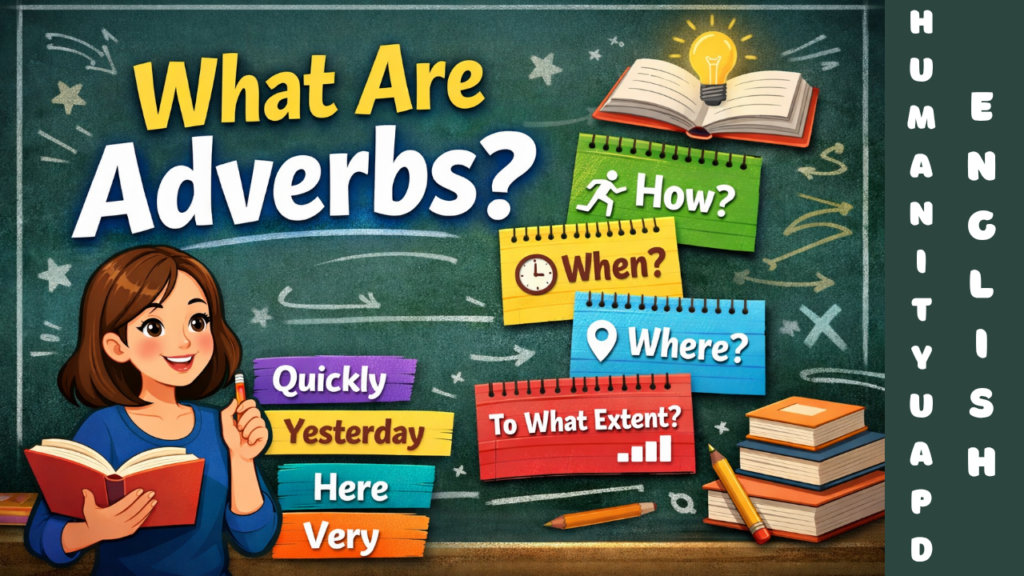
Adverbs are a crucial part of speech in the English language, serving the essential function of modifying verbs, adjectives, and even other adverbs. By definition, adverbs provide additional information about how, when, where, and to what extent an action is performed, adding depth and clarity to sentences. This modification can enhance the reader’s understanding of the action or description being conveyed.

Typically, adverbs can be identified by their ability to answer specific questions such as “how?”, “when?”, “where?”, and “to what extent?” For instance, if one considers the sentence “She ran quickly,” the adverb “quickly” modifies the verb “ran” by specifying the manner in which the running occurred. This enhancement illustrates the importance of adverbs as they significantly influence the meaning of the action being described.

Additionally, adverbs can also modify adjectives, which underscores their versatility. For example, in the phrase “very tall,” the adverb “very” modifies the adjective “tall,” indicating the degree of tallness described. Similarly, adverbs can modify other adverbs, as seen in the phrase “extremely quickly,” where “extremely” augments the meaning of the adverb “quickly.” This ability to modify multiple parts of speech is vital for articulating complex ideas and emotions succinctly.

In summary, adverbs play a significant role in grammar by determining the nuances of meaning in communication. Their capacity to modify various components within a sentence not only enriches the language but also allows for precise and vivid expression. Understanding how adverbs function is fundamental for mastering effective writing and comprehension in the English language.