Tag Archives: Learning

English Conversations at Work or School | Free English Course (2026)

English Conversations at Work or School

English Conversations at Work or School

Fluency in English is increasingly vital in both the workplace and educational environments. As the lingua franca of international business and academia, proficiency in English facilitates effective communication among diverse groups of individuals. In workplaces where collaboration and teamwork are key, being able to articulate ideas clearly in English can lead to more productive discussions and foster a positive work culture.

Similarly, in educational settings, many schools and universities have adopted English as the medium of instruction. This trend underscores the need for students to acquire English language skills not only for academic success but also for social interaction. Understanding English helps students make friends, engage in group projects, and seek assistance when necessary, creating a more inclusive and supportive learning environment.

Moreover, English proficiency can significantly enhance career prospects. Many employers prioritize candidates who can communicate effectively in English as it suggests a certain level of education, adaptability, and globalization awareness. Language skills become an asset that distinguishes an individual in the increasingly competitive job market. Additionally, the ability to converse in English opens avenues for networking, mentorship opportunities, and collaborations that may not be accessible otherwise.

In essence, investing in English language learning is crucial for anyone aiming to thrive in a modern workplace or academic institution. It not only supports day-to-day communication but also empowers individuals to express their thoughts, share innovative ideas, and forge meaningful connections. As we progress further into a globalized world, the importance of mastering English in these contexts cannot be overstated.

How to Correct Yourself While Speaking | english.humanityuapd.com

How to Correct Yourself While Speaking

How to Correct Yourself While Speaking

Self-correction plays a vital role in the process of learning and mastering a new language. It is essential to recognize that making mistakes is an inherent aspect of this journey. From novice speakers to advanced learners, everyone encounters errors in pronunciation, grammar, vocabulary, and syntax. Acknowledging these mistakes is not a sign of failure; rather, it represents a critical opportunity for growth and improvement.

The ability to self-correct enables learners to become more self-aware concerning their language use. Every error made during speaking provides valuable insights into areas necessitating further practice and refinement. As we engage in conversations, whether with native speakers or fellow learners, our mistakes often highlight specific patterns that require attention. Consequently, embracing mistakes as part of the learning process can enhance an individual’s ability to communicate effectively.

Moreover, self-correction fosters confidence in language abilities. When learners develop the skill to recognize and amend their own errors, they demonstrate greater autonomy in their communication. This autonomy not only improves fluency but also encourages a pro-active approach to learning, ultimately leading to a more satisfying and effective language experience.

Additionally, cultivating a habit of self-correction helps reinforce language rules and structures in the learner’s mind. Each time a mistake is corrected, it becomes an opportunity to solidify understanding. Over time, this practice leads to increased proficiency, as the learner becomes more adept at identifying similar mistakes in the future.

In summary, accepting and embracing the natural occurrence of mistakes while speaking significantly contributes to the learning process. It enhances self-awareness, builds confidence, and reinforces language skills, making self-correction a critical component of language acquisition.

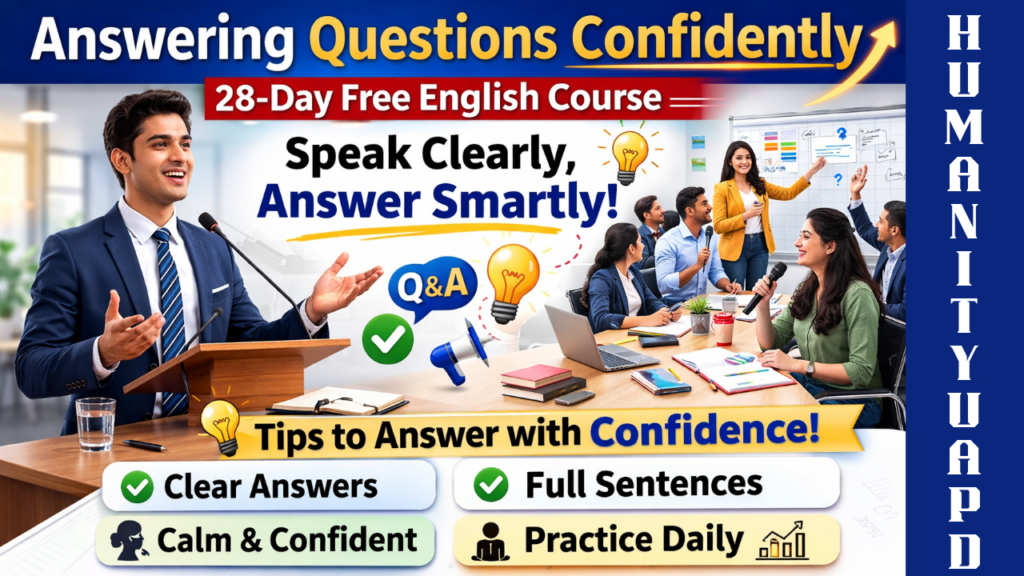
Answering Questions Confidently | english.humanityuapd.com

Answering Questions Confidently

Answering Questions Confidently

Confidence plays a pivotal role when it comes to answering questions in English, as it directly impacts the effectiveness of communication. When learners approach a query with assurance, their ability to convey thoughts becomes significantly enhanced. This confidence not only allows speakers to articulate their ideas clearly but also fosters a positive impression on listeners, which is especially crucial in environments such as school, work, and daily interactions.

In an academic setting, for example, a student who answers questions with confidence is likely to engage their peers and instructors. This engagement can lead to a more dynamic exchange of ideas and encourages others to participate actively. A confident response demonstrates a command of the subject matter, instilling trust in the speaker’s knowledge. When classmates perceive a student as self-assured, they may be more inclined to seek their input, resulting in collaborative learning opportunities.

In the workplace, the importance of confidence becomes even more pronounced. Professionals who answer questions with certainty are often seen as leaders. This can influence team dynamics positively, fostering an environment where ideas are freely shared and innovation is encouraged. For instance, during meetings, employees who present their thoughts confidently are likely to gain respect from colleagues and superiors alike. This respect can translate into greater responsibilities and career advancement opportunities.

Moreover, in everyday life, everyday conversations benefit immensely from confident answering. Whether at a grocery store, a restaurant, or during informal gatherings, answering questions with poise can encourage interactions. This engagement helps cultivate relationships, making communication more pleasant and effective. Overall, the ability to answer questions with confidence not only enhances personal self-esteem but also significantly improves the quality of interactions in all aspects of life.

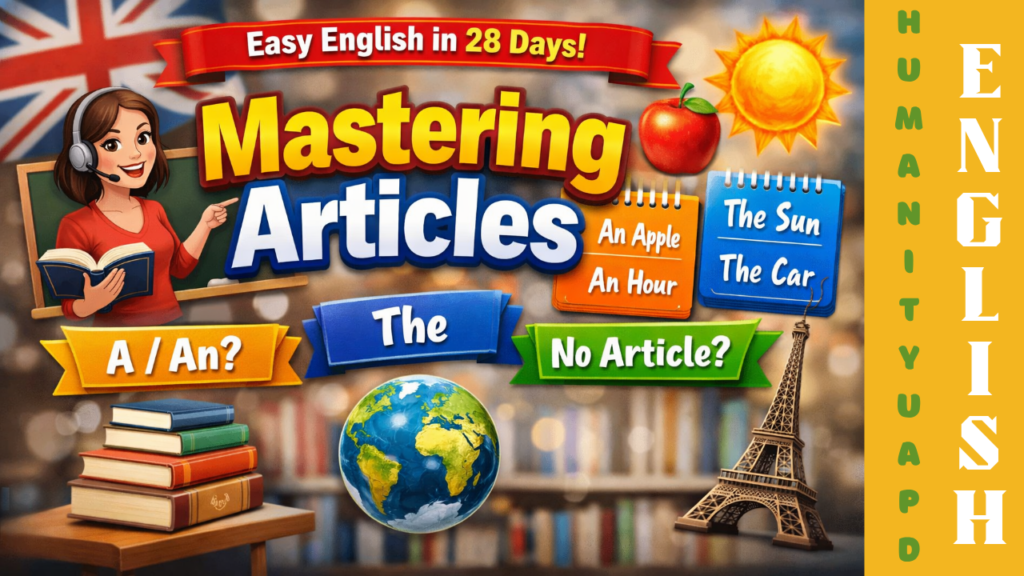
Articles | Easy English Course in 28 days | Absolutely Free

Articles

Articles

In the English language, articles are essential components that serve to clarify the specificity and definiteness of nouns. They function as determiners, providing crucial information about the nouns they precede. Essentially, there are two types of articles: definite articles and indefinite articles. Understanding how these articles operate within sentences is vital for grasping the nuances of English syntax.

The definite article, “the,” indicates a specific noun that is known to the reader or listener. For example, in the phrase “the book on the table,” the article specifies which book is being referred to, implying that it is a particular book familiar to both the speaker and the audience. This specificity is pivotal in ensuring clear communication.

On the other hand, indefinite articles, which include “a” and “an,” refer to non-specific nouns. They are used when the exact identity of the noun is not crucial or when it is being mentioned for the first time. For instance, saying “a dog barked” introduces the idea of any dog rather than a specific one. Such distinctions play a significant role in conveying meaning accurately.

The use of articles not only aids in avoiding ambiguity but also enriches the English language by allowing greater flexibility in expressing both general and specific ideas. Articles contribute to the syntactic structure of sentences, enabling speakers and writers to convey their thoughts with precision.

Overall, a solid understanding of articles and their proper usage is fundamental for anyone learning English. Mastering this aspect of grammar aids in effective communication, ensuring that messages are delivered clearly and succinctly.

Adverbs | Learn English absolutely free | english.humanityuapd.com

What Are Adverbs

What Are Adverbs?

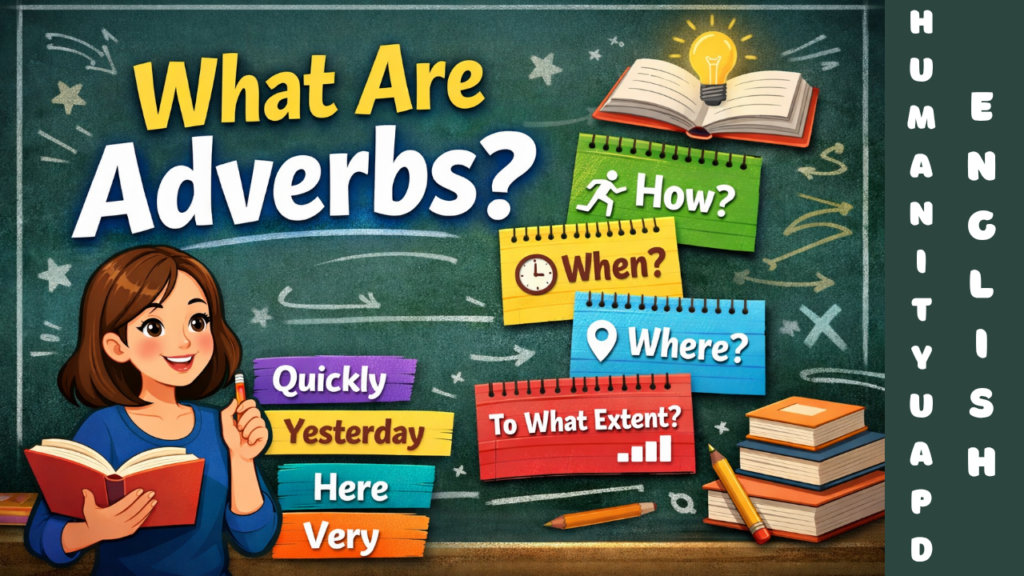
Adverbs are a crucial part of speech in the English language, serving the essential function of modifying verbs, adjectives, and even other adverbs. By definition, adverbs provide additional information about how, when, where, and to what extent an action is performed, adding depth and clarity to sentences. This modification can enhance the reader’s understanding of the action or description being conveyed.

Typically, adverbs can be identified by their ability to answer specific questions such as “how?”, “when?”, “where?”, and “to what extent?” For instance, if one considers the sentence “She ran quickly,” the adverb “quickly” modifies the verb “ran” by specifying the manner in which the running occurred. This enhancement illustrates the importance of adverbs as they significantly influence the meaning of the action being described.

Additionally, adverbs can also modify adjectives, which underscores their versatility. For example, in the phrase “very tall,” the adverb “very” modifies the adjective “tall,” indicating the degree of tallness described. Similarly, adverbs can modify other adverbs, as seen in the phrase “extremely quickly,” where “extremely” augments the meaning of the adverb “quickly.” This ability to modify multiple parts of speech is vital for articulating complex ideas and emotions succinctly.

In summary, adverbs play a significant role in grammar by determining the nuances of meaning in communication. Their capacity to modify various components within a sentence not only enriches the language but also allows for precise and vivid expression. Understanding how adverbs function is fundamental for mastering effective writing and comprehension in the English language.

JustSketchMe SaaS Business for Sale: 3D Modeling

SaaS Business for Sale: JustSketchMe – 3D Modeling

Are you looking for an exciting business opportunity in the digital art space? Look no further! JustSketchMe, a highly successful 3D modeling SaaS platform, is now available for purchase.

What is JustSketchMe?

JustSketchMe is a powerful tool used by artists, illustrators, and creatives to design and visualize characters in 3D. With over 1,000 active subscribers and cross-platform functionality (available on Web, Mac, Windows, iOS, and Android), this platform has become a go-to resource for anyone needing a flexible, intuitive, and high-quality 3D modeling solution.

Key Business Highlights:

  • Revenue: $181,000 in trailing twelve-month subscription revenue.
  • Profit Margin: 90%, with minimal overhead costs, making this business extremely profitable.
  • Monthly Profit: $12,891.
  • User Engagement: Over 1,000 active subscribers with a 10% overall churn rate, showcasing strong customer retention.
  • Growth Potential: Untapped marketing potential via influencer partnerships and additional product features.

Revenue Streams:

JustSketchMe operates a freemium model, offering a free version that attracts a wide user base, while tiered subscription plans and one-time purchases provide premium features. This creates multiple revenue streams, making it a versatile business model.

Why Invest in JustSketchMe?

With an 85% profit margin and high user satisfaction, JustSketchMe presents a strong opportunity for any entrepreneur or investor looking to capitalize on a proven SaaS business. The platform’s ease of operation and low maintenance make it ideal for passive income generation.

The creative industry is booming, and JustSketchMe is perfectly positioned to grow even further with a few strategic enhancements.

If you’re interested in acquiring this unique SaaS business, now is the perfect time to take advantage of this golden opportunity!