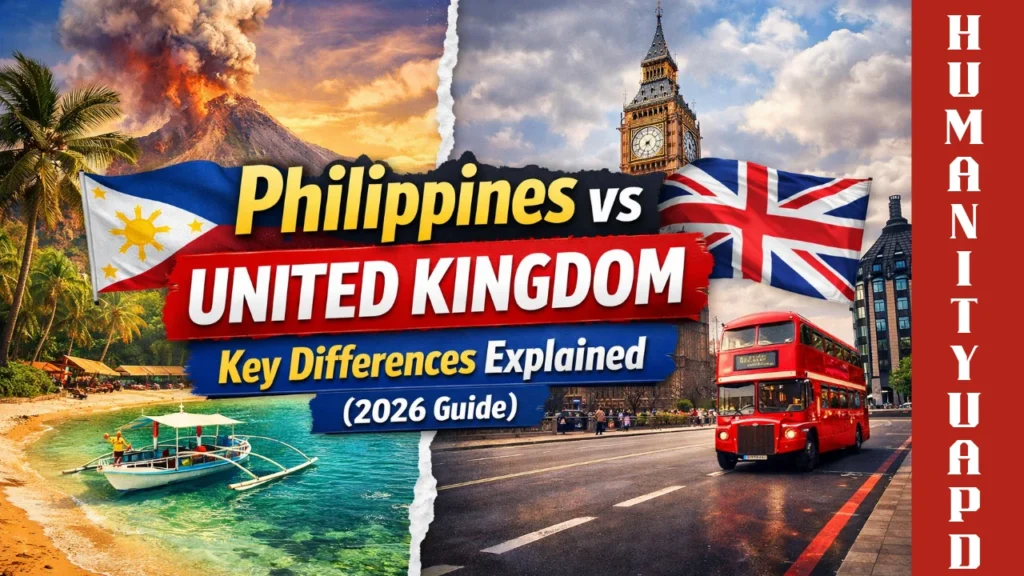
Philippines and United Kingdom (UK)
The Philippines and the United Kingdom are two distinct nations that play notable roles in the global landscape, each with unique characteristics that shape their identities. Geographically, the Philippines is an archipelago located in Southeast Asia, comprising over 7,000 islands in the western Pacific Ocean. It is situated to the east of Vietnam and north of Indonesia, covering an area of approximately 300,000 square kilometers. In contrast, the United Kingdom is located north-west of mainland Europe, consisting of Great Britain and the northeastern part of the island of Ireland, spanning around 243,000 square kilometers.
Demographically, the Philippines has a population of about 113 million people, making it the 13th most populous country in the world. The population is ethnically diverse, with more than 175 ethnolinguistic groups and a variety of local dialects, the most predominant being Tagalog. In contrast, the United Kingdom, with a population of approximately 67 million, is commonly known for its historical and cultural significance, integrating influences from various countries due to its colonial past.
Culturally, the two countries exhibit rich and vibrant traditions. The Philippines is characterized by a blend of indigenous, Spanish, and American influences, which manifest in its festivals, cuisine, and music. Celebrations like the Sinulog and Ati-Atihan festivals reflect this cultural diversity. Meanwhile, the United Kingdom boasts a rich tapestry of history and arts, known for its contributions to literature, music, and theatre, with figures such as Shakespeare and the Beatles having a lasting impact worldwide.
Understanding the geographical, demographic, and cultural frameworks of both nations lays the foundation for a profound examination of their scientific pursuits, challenges, and achievements. This comparative analysis aims to explore how these elements influence various scientific dimensions in each country.


You must be logged in to post a comment.