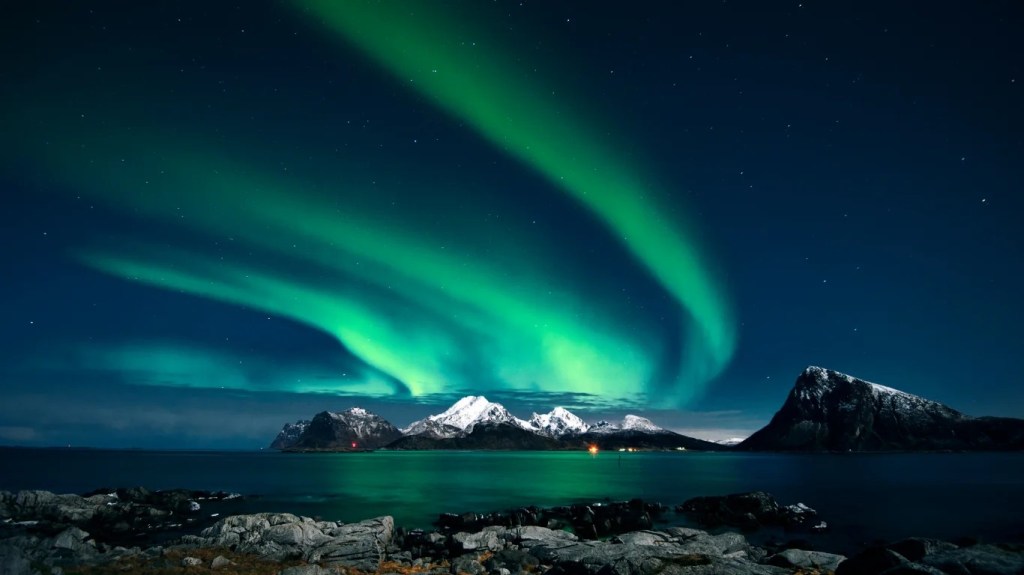
Unveiling the Mystery of the Northern Lights: Nature’s Most Magical Show
The Northern Lights, also known as the Aurora Borealis, are one of the most breathtaking natural phenomena visible on Earth. Often seen dancing across the polar skies in shades of green, pink, purple, and blue, this celestial light show has fascinated humanity for centuries. But what causes this dazzling display, and why does it only occur in certain regions? Let’s explore the science, wonder, and viewing tips behind the Northern Lights.
What Are the Northern Lights?
The Northern Lights are a result of interactions between the Earth’s magnetic field and charged particles from the sun, known as solar wind. When these particles collide with atoms and molecules in the Earth’s atmosphere—primarily oxygen and nitrogen—they emit light. This process is called ionization.
The color of the aurora depends on which gas is involved and how high the collisions occur. For instance:
- Green is the most common and is produced by oxygen at lower altitudes (around 100–300 km).
- Red is rarer and occurs from oxygen at higher altitudes.
- Blue and purple hues come from nitrogen molecules.
Why Do the Northern Lights Occur Near the Poles?
The Earth’s magnetic field guides solar particles toward the polar regions, forming oval-shaped zones known as the auroral ovals. This is why the best sightings of auroras happen in high-latitude areas such as:
- Northern Norway
- Sweden
- Finland
- Iceland
- Canada
- Alaska
- Northern parts of Russia
These locations offer clearer, darker skies and frequent auroral activity, especially during the winter months.
When Is the Best Time to See the Northern Lights?
While the Northern Lights can occur any time of year, they are best viewed during the Aurora Season, which spans from late September to early April in the Northern Hemisphere. During this time, long nights and dark skies improve visibility.
For optimal viewing:
- Choose a location far from city lights.
- Visit during a new moon or when moonlight is minimal.
- Check space weather forecasts for geomagnetic storm activity.
Websites like NOAA’s Space Weather Prediction Center and Aurora Alerts apps can help predict when the auroras are likely to appear.
Cultural Significance and Myths
Throughout history, the Northern Lights have inspired legends and beliefs among many cultures. The Vikings believed the lights were reflections from the shields of Valkyries, while some Inuit communities saw them as spirits of the dead dancing in the sky.
In modern times, the aurora has become a symbol of nature’s beauty, peace, and wonder—often topping travelers’ bucket lists and inspiring awe in those fortunate enough to witness it.
The Southern Lights: Aurora Australis
While the Northern Lights get most of the attention, the Aurora Australis—or Southern Lights—occur in the Southern Hemisphere. They are visible from parts of:
- Antarctica
- Southern New Zealand
- Tasmania (Australia)
- The southernmost regions of South America
The science behind them is the same, but their remoteness makes them harder to observe for most people.
Final Thoughts
The Northern Lights are a reminder of how interconnected our planet is with the vastness of space. From solar winds that travel millions of miles to the dance of particles above our atmosphere, it’s a humbling cosmic ballet.
Whether you’re a science enthusiast, a traveler in search of wonder, or simply someone looking up at the sky with curiosity, the Northern Lights offer an unforgettable experience.
Want to learn more about space, science, and the wonders of nature?
👉 Visit https://humanityuapd.com for more deep insights and videos.

You must be logged in to post a comment.