Tag Archives: dailyprompt-1903

Mesopotamia and Persia | A Complete Visual Guide

Mesopotamia and Persia

Mesopotamia and Persia

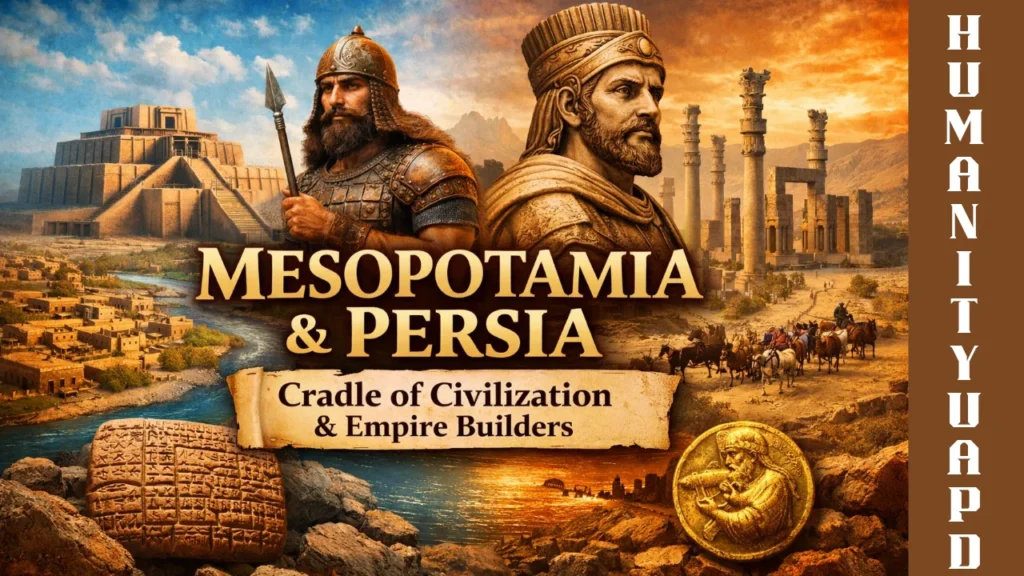
Mesopotamia, often referred to as the “Cradle of Civilization,” is located between the Tigris and Euphrates rivers, primarily in present-day Iraq. This ancient region is notable for being one of the first places where complex urban centers emerged, marking the beginning of significant advancements in human society around 3500 BCE. The key civilizations that thrived in Mesopotamia include the Sumerians, Akkadians, Babylonians, and Assyrians. Each of these societies made substantial contributions to  science, mathematics, and writing, with the invention of cuneiform, one of the earliest forms of writing.

Persia, corresponding largely to modern-day Iran, evolved as a significant empire from the 6th century BCE, characterized by its extensive territorial expansion and sophisticated administration under leaders such as Cyrus the Great and Darius I. The Persian Empire became renowned for its innovations in infrastructure, including the construction of roads and the establishment of an efficient postal system. These advancements not only facilitated trade and communication but also enabled a level of administrative organization that influenced subsequent empires.

Both Mesopotamia and Persia played pivotal roles in shaping human history, particularly in scientific domains. They laid the groundwork for mathematics through concepts such as the sexagesimal system, which is still fundamental in measuring time in hours and minutes. Furthermore, the advancements in astronomy and medicine in these regions provided the basis for future studies that would extend throughout the ages.

The enduring legacy of these ancient civilizations continues to resonate today, illuminating the profound impact that Mesopotamia and Persia have had on science, culture, and governance across the globe. Understanding their contributions offers critical insights into the development of human knowledge and society.

Daily writing prompt
What’s the most fun way to exercise?

Amino Acids Compounds | April 2026 | HUMANITYUAPD

Amino Acids Compounds

Amino Acids Compounds

Amino acids are organic compounds that serve as the fundamental building blocks of proteins, which are essential for numerous biological processes within the body. Composed of carbon, hydrogen, oxygen, nitrogen, and in some cases, sulfur, amino acids play a crucial role in creating the proteins that are vital for cellular structure, function, and regulation. These compounds facilitate a variety of biochemical reactions, contributing to crucial physiological processes such as metabolism, immune response, and cell signaling.

There are twenty different amino acids, each with distinct properties and functions, classified into two main categories: essential and non-essential amino acids. Essential amino acids cannot be synthesized by the body and must be obtained through dietary sources, while non-essential amino acids can be produced by the body. The nine essential amino acids play significant roles in various bodily functions, including the synthesis of hormones, enzymes, and neurotransmitters that significantly influence mood and cognitive functions.

Amino acids are particularly renowned for their importance in muscle growth and recovery. During physical activity, the muscles experience stress and damage; hence, amino acids aid in repair and rebuilding. Branched-chain amino acids (BCAAs), which include leucine, isoleucine, and valine, are especially critical for athletes, as they have been shown to reduce muscle soreness and support muscle protein synthesis, thus enhancing athletic performance.

Furthermore, amino acids contribute to overall health by supporting the synthesis of neurotransmitters, which regulate mood and mental clarity. Additionally, they encourage effective immune functions by aiding in the production of antibodies. Thus, understanding amino acids is paramount for recognizing their indispensable role in maintaining health and supporting various bodily functions.

Daily writing prompt
What’s the most fun way to exercise?