Daily writing prompt
Describe a random encounter with a stranger that stuck out positively to you.

The Tigris and Euphrates rivers represent two of the most significant waterways in the Middle East, shaping the geography and civilization of ancient Mesopotamia. These rivers, which originate in the mountainous regions of eastern Turkey, flow through Iraq and eventually converge in the southern plains, forming a fertile delta as they empty into the Arabian Gulf. The Tigris stretches approximately 1,850 kilometers (1,150 miles) while the Euphrates extends about 2,800 kilometers (1,740 miles), making them key geographical features in the region.
The significance of the Tigris and Euphrates extends beyond their physical dimensions; they have historically served as crucial lifelines for the early societies that flourished in Mesopotamia. This area is regarded as one of the cradles of civilization, where agriculture, urbanization, and sophisticated governance systems emerged. The availability of water from these rivers facilitated irrigation, which was essential for farming in otherwise arid landscapes. As a result, the Tigris and Euphrates formed the backbone of the agricultural economy, enabling communities to sustain themselves and fostering trade and cultural exchange.
Furthermore, the Tigris and Euphrates rivers have been central to the historical narratives of various empires and cultures. From the Sumerians and Babylonians to the Assyrians and later Islamic civilizations, these waterways played a pivotal role in the development of social and political structures. The interplay between these rivers and the civilizations that thrived along their banks is a testament to their enduring impact on the historical landscape of the Middle East.



/
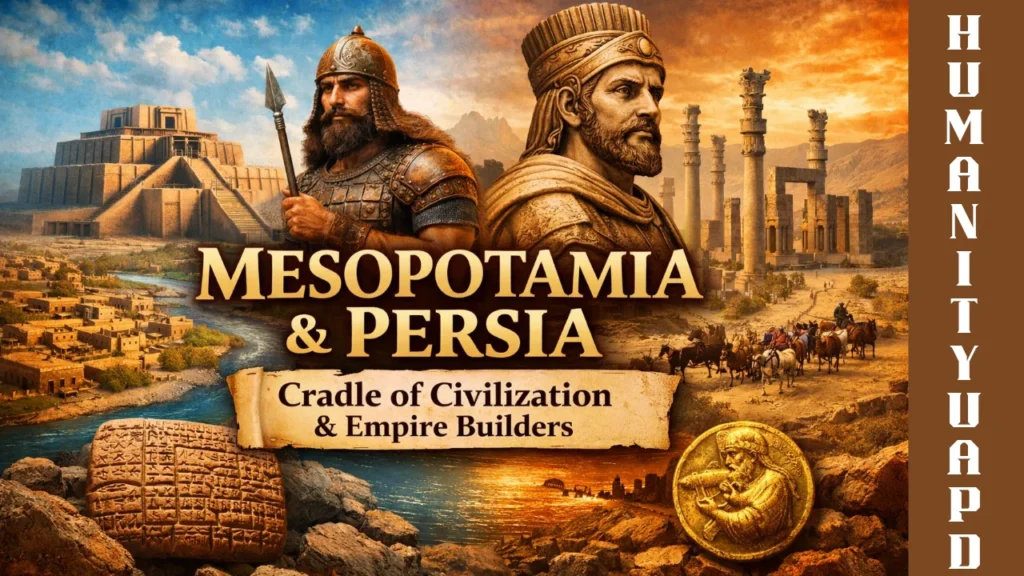
Mesopotamia, often referred to as the “Cradle of Civilization,” is located between the Tigris and Euphrates rivers, primarily in present-day Iraq. This ancient region is notable for being one of the first places where complex urban centers emerged, marking the beginning of significant advancements in human society around 3500 BCE. The key civilizations that thrived in Mesopotamia include the Sumerians, Akkadians, Babylonians, and Assyrians. Each of these societies made substantial contributions to science, mathematics, and writing, with the invention of cuneiform, one of the earliest forms of writing.
Persia, corresponding largely to modern-day Iran, evolved as a significant empire from the 6th century BCE, characterized by its extensive territorial expansion and sophisticated administration under leaders such as Cyrus the Great and Darius I. The Persian Empire became renowned for its innovations in infrastructure, including the construction of roads and the establishment of an efficient postal system. These advancements not only facilitated trade and communication but also enabled a level of administrative organization that influenced subsequent empires.
Both Mesopotamia and Persia played pivotal roles in shaping human history, particularly in scientific domains. They laid the groundwork for mathematics through concepts such as the sexagesimal system, which is still fundamental in measuring time in hours and minutes. Furthermore, the advancements in astronomy and medicine in these regions provided the basis for future studies that would extend throughout the ages.
The enduring legacy of these ancient civilizations continues to resonate today, illuminating the profound impact that Mesopotamia and Persia have had on science, culture, and governance across the globe. Understanding their contributions offers critical insights into the development of human knowledge and society.


You must be logged in to post a comment.