Tag Archives: Artificial intelligence

Google Workspace | HUMANITYUAPD | humanityuapd.com (2026)

Google Workspace

Understanding Google Workspace

Google Workspace, formerly known as G Suite, is a comprehensive suite of cloud-based productivity and collaboration tools developed by Google. This powerful toolkit is designed to enhance the efficiency and effectiveness of businesses of all sizes, from small startups to global enterprises. The shift from G Suite to Google Workspace is marked by an integration-driven approach, aimed at providing an intuitive and seamless user experience.

Central to Google Workspace are its core applications, each crafted to address a variety of workplace needs. Gmail, the widely-used email service, offers robust communication capabilities with a user-friendly interface. Google Drive, a cloud storage solution, provides ample space for file management, sharing, and collaboration. Google Docs, Sheets, and Slides are versatile tools for creating documents, spreadsheets, and presentations, respectively, allowing for real-time collaboration and version control.

In addition to these essential tools, Google Workspace includes several other applications that contribute to a well-rounded productivity environment. Google Calendar assists with scheduling and time management, ensuring that team members can coordinate effectively. Google Meet and Chat facilitate seamless communication through video conferencing and instant messaging. Furthermore, Google Forms simplifies the creation of surveys and questionnaires, while Google Sites aids in building and maintaining internal websites.

For businesses, Google Workspace’s flexibility and scalability are particularly beneficial. Its array of plans and pricing tiers allows organizations to customize their subscriptions based on specific needs and growth stages. Additionally, Google Workspace’s integration with third-party applications and its robust security measures provide peace of mind, ensuring that business data remains protected.

Altogether, Google Workspace stands as an essential suite for modern businesses, promoting collaboration, productivity, and innovation. With its dynamic range of tools and features, it equips teams with the resources they need to operate efficiently and achieve their goals.

Daily writing prompt
If you could have something named after you, what would it be?

🌍 World Comparison Countries: A Scientific & Data-Driven Overview | 2026

World Comparison Countries

World Comparison Countries

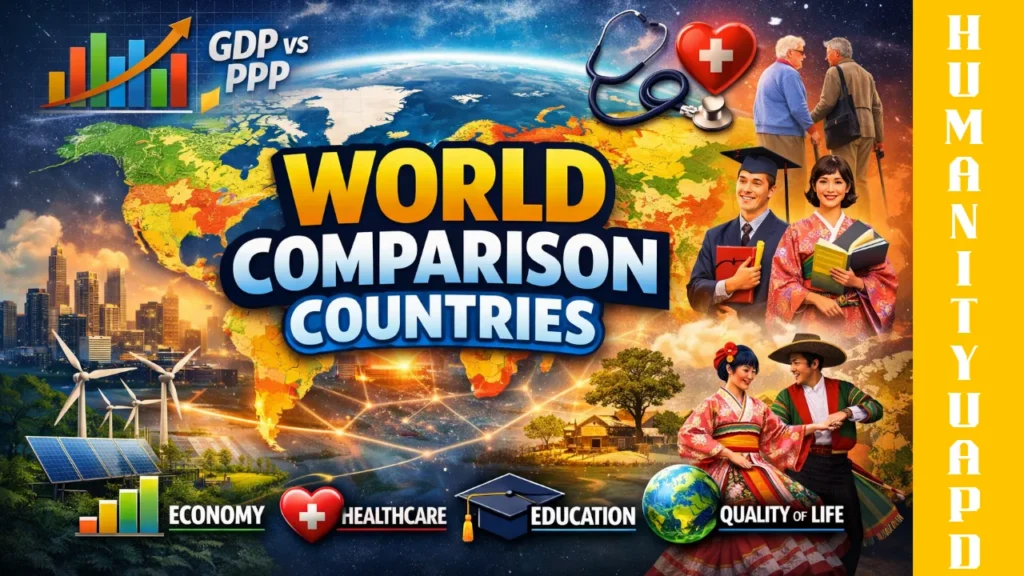
In the contemporary world, the systematic comparison of countries has become increasingly relevant. Such comparisons are bolstered by scientific methods and data-driven assessments, enabling us to gain a deeper understanding of the differences and similarities between nations. By employing statistical data, we can evaluate a variety of domains including economy,  education, healthcare, and cultural diversity. This approach not only provides insights into national performance but also highlights the interdependencies that exist in our global community.

One key aspect of comparing countries scientifically is the ability to utilize empirical data to draw conclusions. For instance, comparing economic indicators—such as GDP, employment rates, and income distribution—across countries reveals stark differences in development levels and wealth distribution. These comparisons can guide policymakers to target specific areas for improvement, ultimately enhancing their country’s economic stability and growth.

Similarly, in education, statistical assessments such as literacy rates, enrollment ratios, and student outcomes can reveal the effectiveness of various educational systems. By understanding these metrics, countries can learn from each other’s successes and failures, paving the way for improved educational policies and practices.

Healthcare is another critical area for scientific comparison. Data regarding life expectancy, access to healthcare services, and public health outcomes illuminate societal health disparities. By analyzing these factors, nations can identify the strengths and weaknesses of their healthcare systems and implement evidence-based reforms.

Ultimately, the relevance of global comparisons cannot be overstated. Statistical data not only facilitates a clearer understanding of national characteristics but also informs international cooperation and development strategies. As we delve into various countries’ profiles, scientific comparisons will reveal the complexities within global dynamics, paving the way for more informed discussions and potential solutions to shared challenges.

Daily writing prompt
What makes you laugh?

🇸🇬 Singapore vs 🇨🇳 China (2026): Power, Growth & Global Influence

Singapore and China

Singapore and China

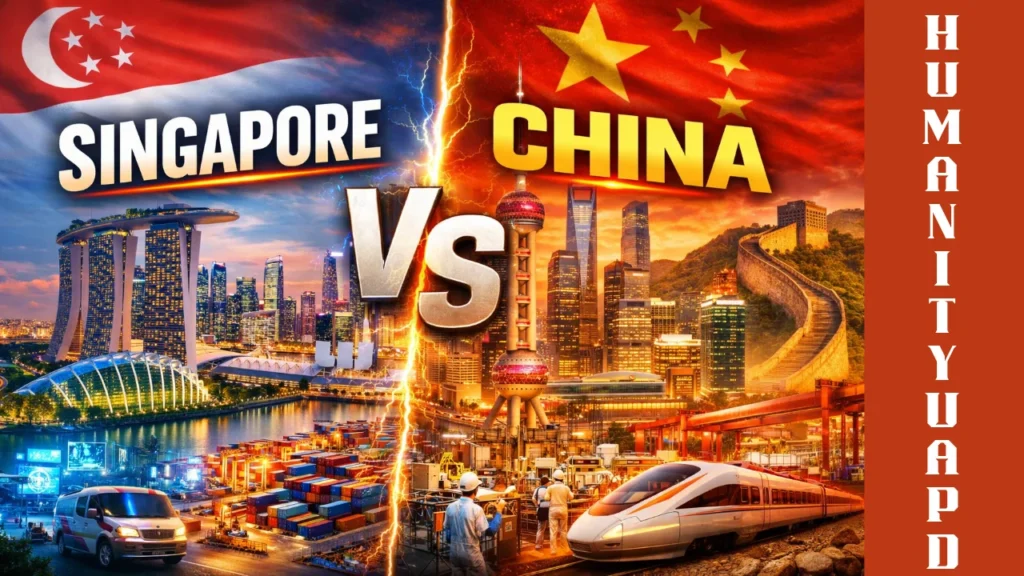
Singapore and China represent two distinct yet influential entities in the global landscape, each characterized by its unique geography, economic strategies, and cultural heritage. Situated in Southeast Asia, Singapore is a city-state known for its strategic geographical position as a global shipping hub. With an area of just 728.6 square kilometers, Singapore is home to approximately 5.7 million residents, fostering a diverse culture that blends Asian and Western influences. The political system of Singapore is a parliamentary republic, exhibiting a stable governance model that has enabled rapid economic growth and infrastructural development.

In contrast, China, the world’s most populous nation, boasts a landmass of approximately 9.6 million square kilometers, housing nearly 1.4 billion inhabitants. It exhibits a vast array of geographical features ranging from mountains to rivers and plains, which contribute to the country’s immense cultural and historical richness. China operates under a single-party socialist republic framework, where the Communist Party of China (CPC) maintains a significant role in shaping policy and governance. This political structure has allowed for sweeping economic reforms, positioning China as the second-largest economy globally.

The economies of Singapore and China have evolved significantly over the years. Singapore’s economy heavily relies on finance, manufacturing, and technology, establishing itself as a global center for commerce and innovation. Meanwhile, China’s economy, with its emphasis on manufacturing and export, has progressed at an astounding pace through state-driven efforts and market reforms, making it a vital player in international trade. Understanding the foundational elements of these two regions is crucial for any analysis of their differing approaches to innovation, economic strategy, and cultural growth.