
Tag Archives: Economy


Tariffs and Taxes


Growth Forecasts | HUMANITYUAPD (2026)

Growth Forecasts
Growth forecasts represent analytical predictions regarding the future expansion of an economy, sector, or business. These estimations serve as essential tools for various stakeholders, including businesses, investors, and policymakers, enabling them to make informed decisions. By providing insights into potential future performance, growth forecasts can aid in the identification of opportunities and challenges within a given market.
The creation of growth forecasts typically involves the collection and analysis of historical data, economic indicators, and relevant trends. This process often incorporates quantitative methods, such as time series analysis and econometric modeling, alongside qualitative assessments from expert opinions. These methodologies help stakeholders gauge potential growth trajectories, allowing for the development of strategies to achieve specific objectives. Effective growth forecasts take into account a myriad of factors, including demographic changes, technological advancements, and shifts in consumer behavior, ensuring a well-rounded perspective on the economic landscape.
The importance of growth forecasts cannot be overstated. For businesses, these predictions provide valuable information for strategic planning, budgeting, and resource allocation. Investors utilize growth forecasts to evaluate potential risks and returns, assisting them in making judicious decisions on asset allocation. Meanwhile, policymakers rely on growth forecasts to shape fiscal and monetary policies aimed at fostering economic stability and growth. By accurately anticipating economic trends, policymakers can respond proactively to challenges, ensuring sustainable development.
Overall, growth forecasts play a crucial role in strategic decision-making within various spheres, helping stakeholders navigate an increasingly complex economic environment. Understanding the fundamentals of growth forecasts and their applications equips individuals and organizations with the necessary tools to adapt and thrive in a rapidly evolving market.




🇸🇬 Singapore vs 🇨🇳 China (2026): Power, Growth & Global Influence
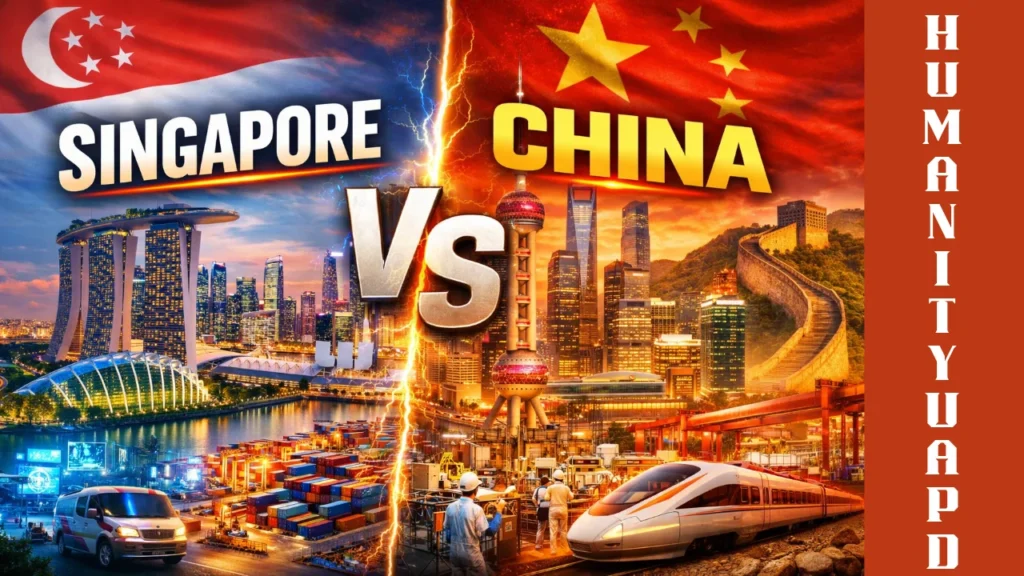
Singapore and China
Singapore and China represent two distinct yet influential entities in the global landscape, each characterized by its unique geography, economic strategies, and cultural heritage. Situated in Southeast Asia, Singapore is a city-state known for its strategic geographical position as a global shipping hub. With an area of just 728.6 square kilometers, Singapore is home to approximately 5.7 million residents, fostering a diverse culture that blends Asian and Western influences. The political system of Singapore is a parliamentary republic, exhibiting a stable governance model that has enabled rapid economic growth and infrastructural development.
In contrast, China, the world’s most populous nation, boasts a landmass of approximately 9.6 million square kilometers, housing nearly 1.4 billion inhabitants. It exhibits a vast array of geographical features ranging from mountains to rivers and plains, which contribute to the country’s immense cultural and historical richness. China operates under a single-party socialist republic framework, where the Communist Party of China (CPC) maintains a significant role in shaping policy and governance. This political structure has allowed for sweeping economic reforms, positioning China as the second-largest economy globally.
The economies of Singapore and China have evolved significantly over the years. Singapore’s economy heavily relies on finance, manufacturing, and technology, establishing itself as a global center for commerce and innovation. Meanwhile, China’s economy, with its emphasis on manufacturing and export, has progressed at an astounding pace through state-driven efforts and market reforms, making it a vital player in international trade. Understanding the foundational elements of these two regions is crucial for any analysis of their differing approaches to innovation, economic strategy, and cultural growth.

You must be logged in to post a comment.