Tag Archives: politics

Global Humanitarian Crises: Key Issues, Impacts & Solutions (2026 Guide)

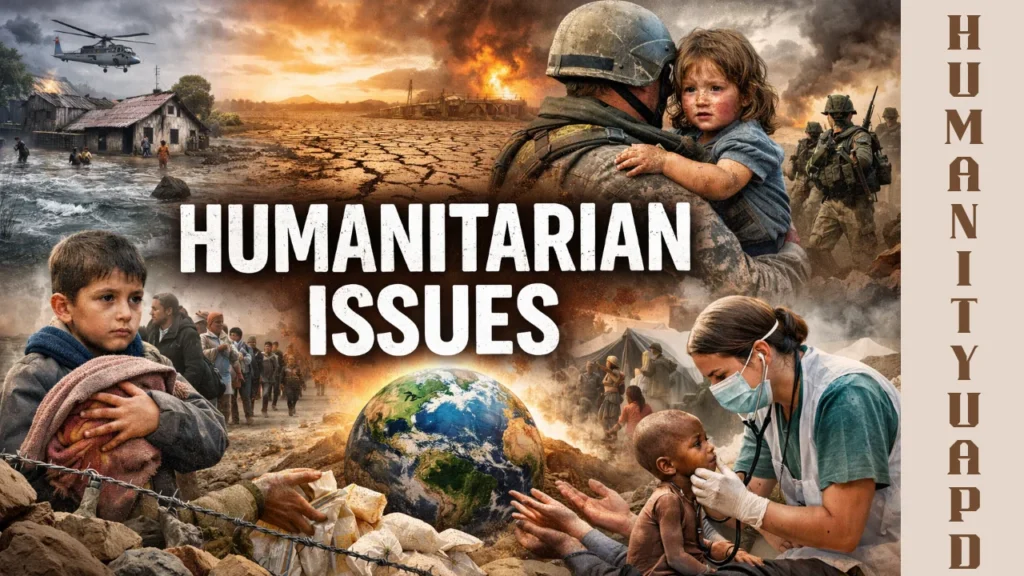
Humanitarian Issues

Humanitarian Issues

Humanitarian issues encompass a wide range of challenges and crises that impact human life and dignity, often demanding urgent responses from the global community. At the heart of humanitarianism lies the commitment to alleviate suffering, protect human rights, and provide assistance to individuals and communities facing distressing circumstances. The term “humanitarian” generally refers to actions that prioritize human welfare, particularly in times of conflict, natural disasters, and social upheaval.

Humanitarian crises can be defined as urgent situations in which large groups of people are unable to meet their basic needs due to factors such as armed conflict, environmental disasters, disease outbreaks, or systemic poverty. Such crises often lead to significant loss of life, displacement of populations, and long-term societal disruptions. Therefore, a clear understanding of these issues is crucial for developing effective strategies and interventions. By identifying the root causes and manifestations of humanitarian crises, stakeholders can mobilize resources and design evidence-based interventions that target the specific needs of affected populations.

Addressing humanitarian issues requires a multi-faceted approach, integrating insights from various disciplines such as medicine, social sciences, and public policy. This science-based perspective is essential for ensuring that responses are not only timely but also tailored to meet the complex realities faced by vulnerable populations. Moreover, employing a  scientific lens fosters accountability and transparency in humanitarian actions, offering a framework for evaluating their effectiveness and impact.

As we delve deeper into the intricacies of humanitarian issues, it is vital to remain informed about the evolving landscape and the diverse factors contributing to crises worldwide. This post will explore the definitions, implications, and responses to humanitarian challenges, with an emphasis on the importance of evidence-based approaches in alleviating human suffering.

Daily writing prompt
Describe one positive change you have made in your life.

Work From Home During War 2026 😱 Iran Israel Conflict & Remote Work Reality

Work from home during the current war (April 2026)

Work from home during the current war (April 2026)

As of April 2026, the geopolitical tensions between Iran and Israel have escalated significantly, impacting various aspects of life, including work environments. The ongoing conflict has resulted in considerable economic and psychological strain on individuals residing in affected regions, creating an urgent need for adaptive strategies in professional settings. The clash between these two nations, marked by military engagements and strategic posturing, has led many to reconsider their work arrangements, prominently ushering in the practice of working from home.

The complexities of the Iran-Israel conflict are multifaceted, involving historical grievances, territorial disputes, and recent incidents that have intensified militaristic rhetoric. Citizens in both countries find themselves navigating a state of uncertainty, grappling with constant developments that might affect their safety and daily operations. As businesses face potential disruptions due to this regional instability, remote work emerges as a viable solution, enabling individuals to maintain productivity while prioritizing their well-being in the face of conflict.

Moreover, the shift towards remote work is not merely a measure of convenience; it reflects a broader societal adaptation to crises. Employees are increasingly recognizing the potential of home offices as safe havens, offering a semblance of normalcy despite the prevailing unrest. In light of this, organizations are investing in technologies and policies that facilitate remote collaboration, creating a virtual workspace that transcends geographic limitations imposed by the ongoing conflict.

In summary, the current geopolitical climate between Iran and Israel necessitates a profound reevaluation of traditional work environments. The transition to working from home during these turbulent times serves as a critical mechanism for resilience, empowering individuals and businesses to continue operating under challenging circumstances while ensuring safety and mental well-being.

Daily writing prompt
How would you improve your community?

Toronto and Vancouver | Canadian Cities | HUMANITYUAPD (2026)

Toronto and Vancouver

Toronto and Vancouver

Toronto and Vancouver, two of Canada’s most prominent cities, serve as vital cultural and economic hubs within the country. Geographically, Toronto is located in the southeastern part of Ontario, on the northwestern shore of Lake Ontario, while Vancouver lies in the southwestern region of British Columbia, along the Pacific Ocean. Both cities not only represent diverse cultural landscapes but also distinctive geographical characteristics that influence their unique urban identities.

In terms of size, Toronto is Canada’s largest city, boasting a population of over 2.7 million residents. It is characterized by its expansive urban sprawl, which encompasses a variety of neighborhoods that contribute to its rich multicultural tapestry. Vancouver, although smaller, with a population of approximately 631,000, is known for its stunning natural scenery and strategic location as a gateway to the Pacific Rim.

The significance of these cities extends beyond their population numbers. Toronto serves as the financial capital of Canada, housing major banks and corporate headquarters, contributing significantly to the national economy. Vancouver, on the other hand, is recognized for its robust tech industry and thriving trade relations with Asia, further establishing its economic importance.

This blog post aims to provide a comprehensive scientific comparison between Toronto and Vancouver, emphasizing key aspects such as climate, economic factors, demographics, and overall livability. By exploring these elements, we seek to uncover the nuances that define each city, outlining how these variables contribute to their respective desirability as places to live, work, and visit. Understanding these differences not only enhances our appreciation of these cities but also highlights the importance of informed decision-making for potential residents and businesses contemplating their next move in Canada.

Daily writing prompt
How would you improve your community?

Social Security COLA | HUMANITYUAPD | humanityuapd.com | 2026

Social Security COLA

Social Security COLA

The Social Security Cost-of-Living Adjustment (COLA) is a mechanism designed to help recipients of Social Security benefits maintain their purchasing power in the face of inflation. As the cost of living rises, typically due to inflation, the value of benefits can erode over time if not periodically adjusted. The COLA aims to mitigate this challenge by providing an annual increase in benefits, helping to ensure that recipients can keep pace with rising expenses on essentials such as housing, healthcare, and groceries.

Established in the 1970s, the COLA was a critical development for the Social Security program. Before the introduction of automatic adjustments, cost-of-living increases required Congressional approval, making them irregular and often inadequate in addressing the needs of beneficiaries. The COLA became part of Social Security in 1972, with the first automatically calculated increase taking effect in 1975.

The COLA is determined based on the Consumer Price Index for Urban Wage Earners and Clerical Workers (CPI-W), which measures average changes in prices paid by urban consumers for a basket of goods and services. Each year, the Social Security Administration (SSA) reviews the CPI-W data from the third quarter of the previous year to the corresponding quarter of the current year. If there is a measured increase in inflation, Social Security benefits are adjusted upward to reflect these changes.

This adjustment is crucial as it ensures that the benefits accurately reflect the economic realities faced by retirees, disabled individuals, and other Social Security beneficiaries. For instance, a significant increase in healthcare costs can disproportionately affect retirees who rely heavily on their Social Security benefits. By receiving annual COLA adjustments, recipients can better manage their finances under fluctuating economic conditions.

Overall, the COLA is an essential element of the Social Security system, safeguarding recipients from the erosion of their benefits due to inflation. It underscores the commitment of the Social Security program to provide stable and reliable support to millions of Americans, enhancing economic security for the nation’s vulnerable populations.

Daily writing prompt
Which aspects do you think makes a person unique?